
When the waves turn rough and the sea feels like your enemy, you hit the end of your rope with two choices: give in or get stronger.
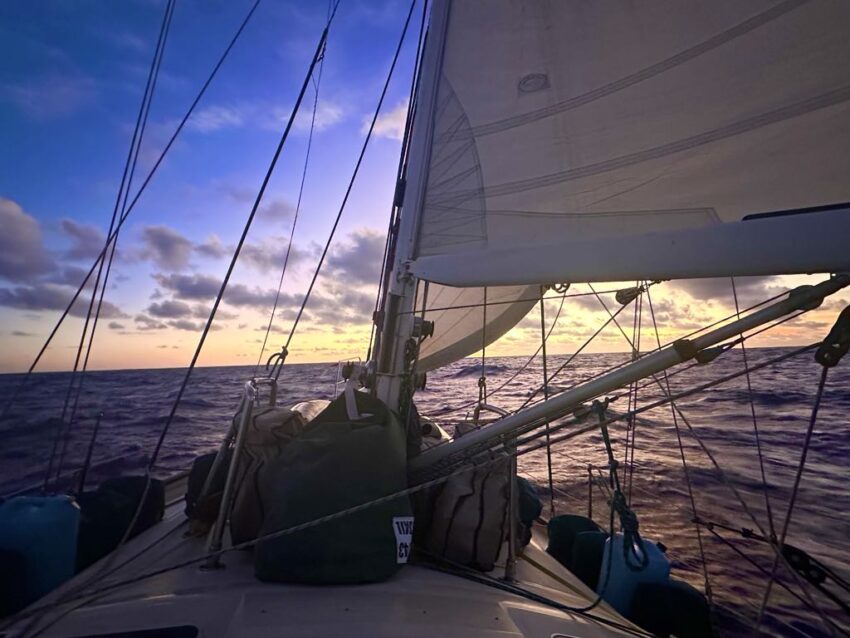
Sunset on the Pacific
As most of you know, our journey has been a wild ride these past months, filled with highs, lows, and everything in between. This has always been about the journey, embracing the adventure, the challenges, and the growth that comes with it. Even when I feel I’ve hit the limit of what I can endure, those difficulties turn into strength, capability, and a richer resume of experience. Here are the details of our latest voyage, the hardships blended with the spirit that keeps us sailing.
Rough Start in Panama
Just to recap, after crossing the Panama Canal, we holed up at Vista Mar Marina in Panama to go home for Christmas. Upon return, we put aside time for what should have been routine repairs. Instead, we faced a string of bad luck over the course of five months. Securing parts proved nearly impossible despite Panama’s 14,000 annual canal transits by sailors. A lack of parts available locally combined with shipping delays stretching our wait. Marina fees, car rentals to hunt for parts, and the parts themselves drained us financially, costing upwards of $30,000. A generous Christmas gift from Dan’s father evaporated like dew on the fourth of July. But we tackled each daunting task head-on, turning setbacks into lessons in resilience. The journey, not just the destination, fueled our resolve.
Crossing the Pacific – Unplanned Stops and Complete Chaos
Our next stop was supposed to be the Galapagos Islands, a bucket-list gem with its 11 islands, 500 endemic animal species (like giant tortoises), 180 endemic plant species, and the most pristine and prehistoric-feeling vistas on the planet.
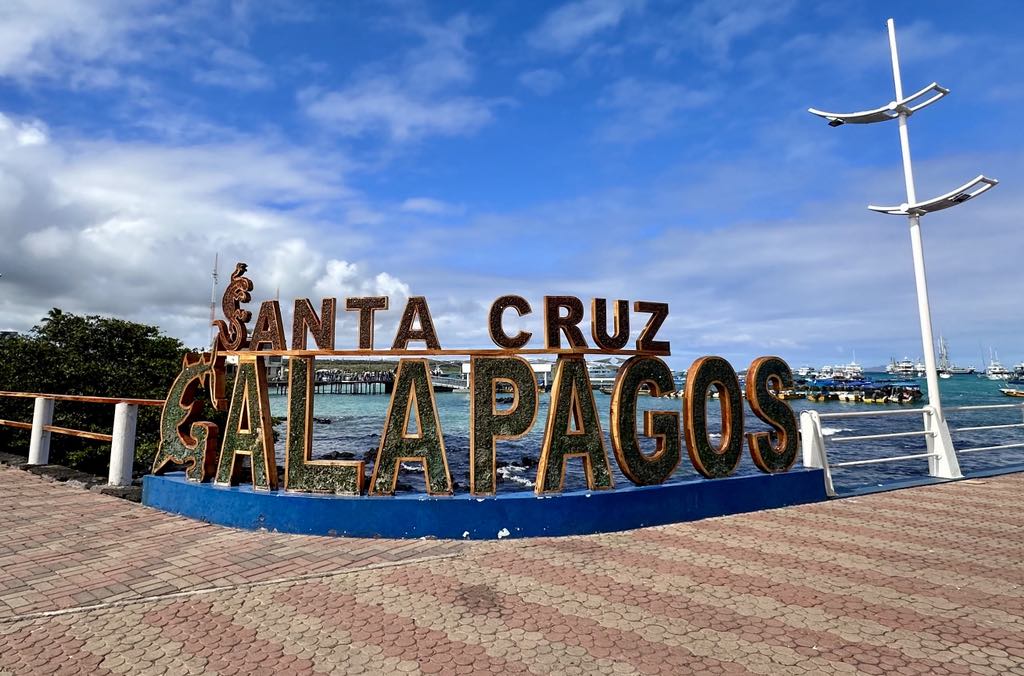
But $4,000 in check-in and anchoring fees forced a heartbreaking decision to skip it. Three attempts to depart for the Pacific followed, with the heartbreak of watching all the friends we had made – depart to make the crossing without us.
As each of our attempts was thwarted by misfortune, Lady Luck finally decided to lend us a hand. Off we went. Wind at our back, our hopes and energy high. Then, 7 days out, our engine, repaired and serviced a month earlier after departure attempt #1, shut down from low oil pressure. Two days later, our brand-new $7,000 forestay failed, ripping our headsail. An emergency landing in the Galapagos became our destiny, and we couldn’t have been happier to crash-land there.
This silver lining allowed us to explore three islands, dive with hammerhead sharks, manta rays, and sea turtles, and we were able to explore the magical Galapagos. It has become a highlight of our travels thus far, and all by accident, once again reinforcing that disasters can result in wonderful outcomes.
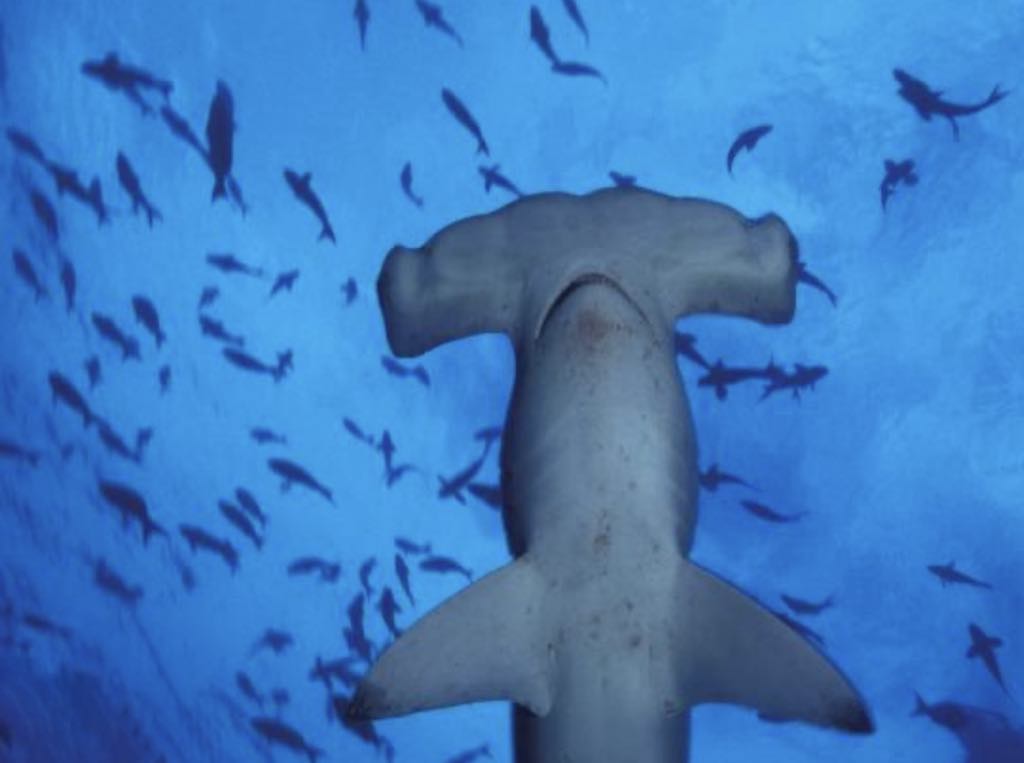
Diving in the Galapagos (Watch our video of the dive on our Sailmates Facebook Page!)
Pacific Perils: Why the Crossing is Tough
We thought smooth sailing awaited beyond the Galapagos (it was a rough and challenging ten days to get there), then we finally would hit the stout but steady trade winds that would carry us the 2,500 miles to the French Polynesians. The passage from Panama to the Galapagos is notoriously difficult due to the Humboldt Current clashing with the Panama Current, creating unpredictable swells. The Intertropical Convergence Zone (ITCZ) shifts, spawning erratic wind patterns and confused sea states as weather systems above and below the equator collide. Unlike Thor Heyerdahl’s 1947 Kon-Tiki raft voyage—proving Polynesia could be settled by South American currents—this crossing defies passivity.
This Pacific crossing would be our fourth ocean crossing. After a gentle breeze 2,000-mile Atlantic run from Cape Verde to the Caribbean, this 3,000-mile trek was a rude awakening. I thought surely it would be similar to our downwind run across the Atlantic. Boy, was I wrong.
Having watched a dozen familiar sailboats cross to French Polynesia, we assumed we’d be fine. Yet, most faced challenges: a broken mast (one sailor drifted 40 days after losing his), major repairs forcing two to turn back, and three catamarans sank post-arrival. Almost every boat reported something breaking along the way. However, sailors are a brave lot, pushing through with grit and celebrating success. This passage’s difficulty stems from its length, shifting winds, and rogue waves—far tougher than our Atlantic “cakewalk.”
And Then: The Unthinkable
Just a few days into the Pacific, our $600 Galapagos-repaired sail tore again due to the forestay’s improper installation when the bottom of the forestay came apart. The jib, crucial for downwind sailing (dominant in this passage), left us scrambling. We could either turn back or make do with what we had left. We modified our sails, clinging to the three essentials: still alive, still in love, and still afloat. We refused to turn back, even though it meant days added to our passage without our trusty jib that was just fully mended a week earlier. Winds continued to be brisk making our staysail adequate when combined with a very favorable equitorial current.
The Chinese Fishing Fleet Encounter
Things nosedived when Dan woke me at dawn with, “We have a situation.” Bleary-eyed from night watches—tough on my eight-hour sleep need—I saw 200-foot Chinese fishing vessel lights dotting the horizon. Our radar showed a ten-boat fleet, our path cutting through them. The AIS revealed two closings within 300 feet—dangerous and unacceptable. I hailed them on VHF, met with silence (a known trait even though maritime law requires responses). We fired up our engine, slipping past the first one as it hold course toward our beam. Fury surged, but we escaped. The second altered course seemingly directly toward us but slipped past our stern with the slightest of margins. Their notorious infractions in international waters include illegal fishing, bycatch dumping (endangering 300,000 marine animals yearly), and ignoring radio hails, per global reports.
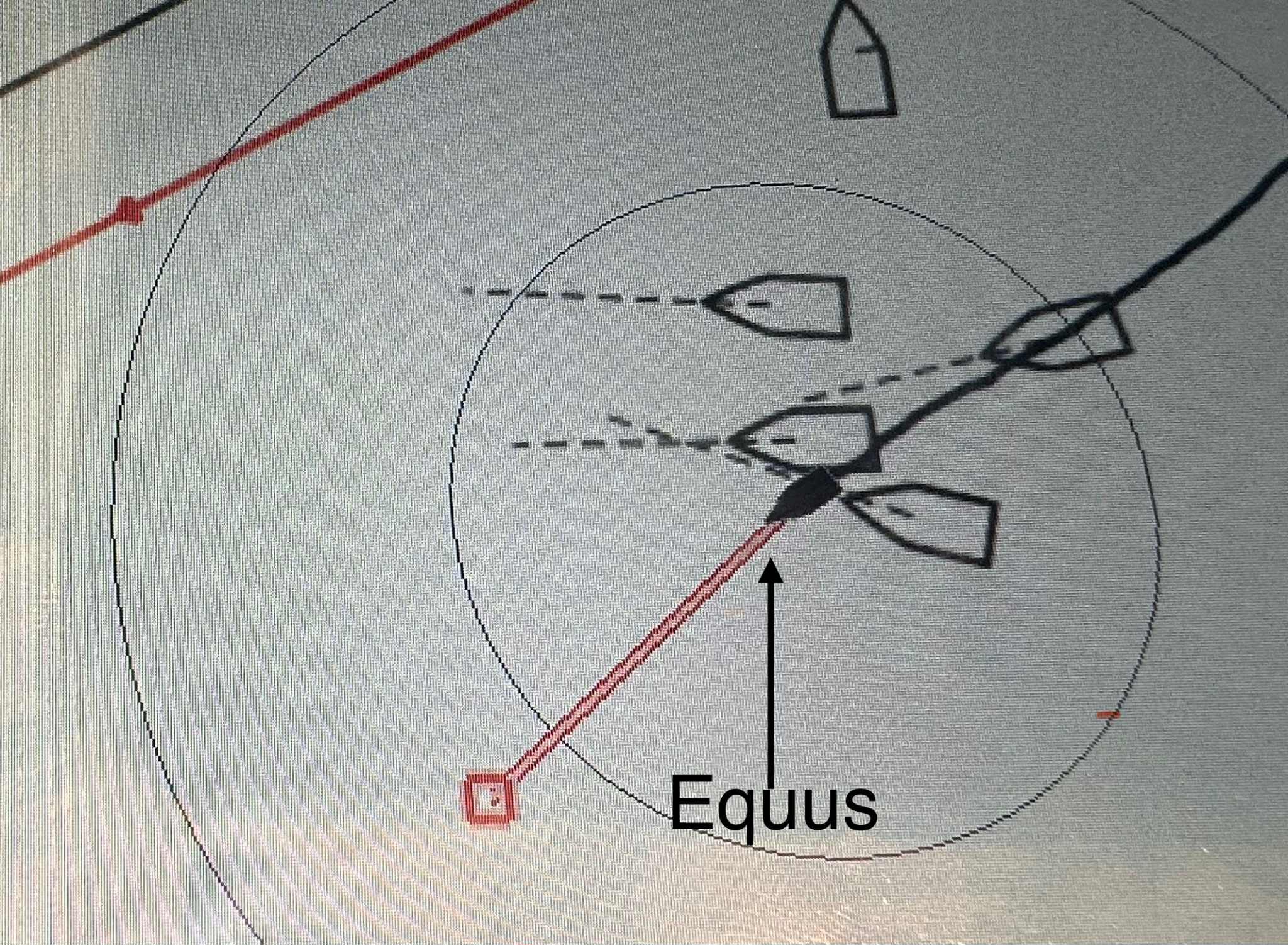
(Image from our radar. We are the tiny black boat in the middle.)
Autopilot Failure and Rudder Mystery
Two days later, I yearned for a “beautiful sailing day”—sunshine, gentle waves, a brisk breeze—yet the Pacific’s choppy, multi-directional waves and rare sun mocked me. Then, things went from bad to catastrophic. At 9 PM, alarms blared: “No Rudder Response.” Winds whipped, seas tossed us, and heaving to—turning the boat into the wind to stabilize—failed as our rudder faltered. Boom crashes from accidental jibes terrified me. The noise was deafening. I was sure something was going to break. With no other recourse, we tried to use the engine power to heave to (a common storm procedure of counter ballancing the sails to halt forward movement and ride comfortably over the waves). After several more attempts, we were finally successful. The silence was deafening but for the sound of my racing heart.
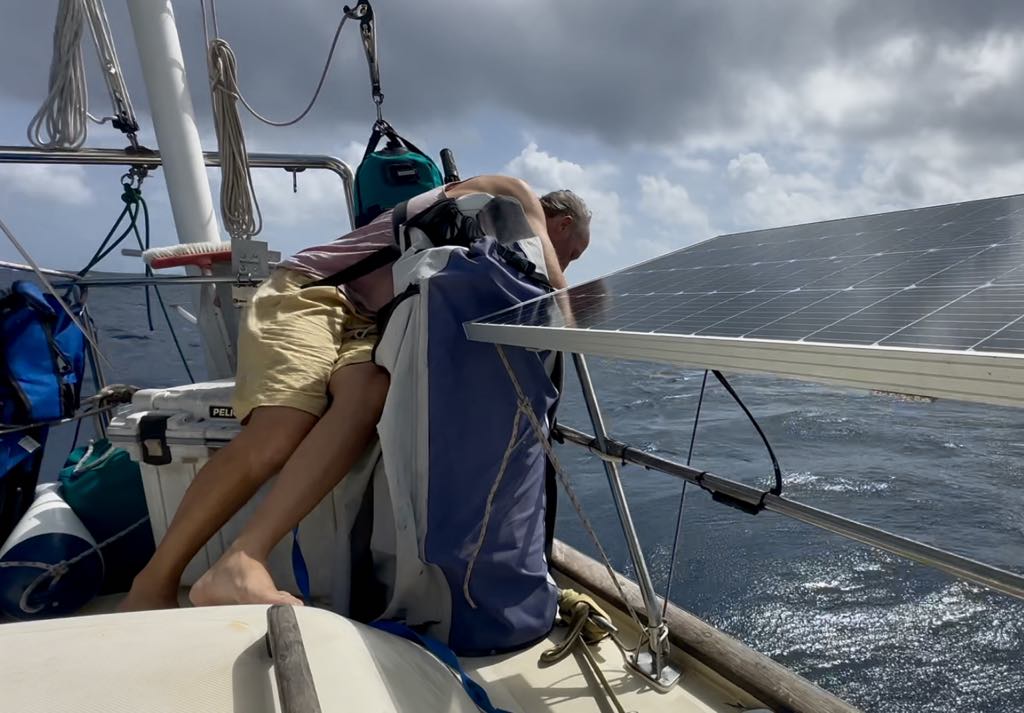
Dan’s theory was that our rudder got caught in something. Dan suggested a potential net entanglement from the fishing fleet (reported by other sailors), but a GoPro on a boat hook showed scrape marks, not nets. Thinking whatever caused our stoppage was dislodged as we bobbed in the waves overnight we got underway and engaged our autopilot. No Luck, our year-old autopilot, a battle to install, was broken. Hand-steering loomed. Hand-steering in rough conditions is the one great fear I had yet to face.
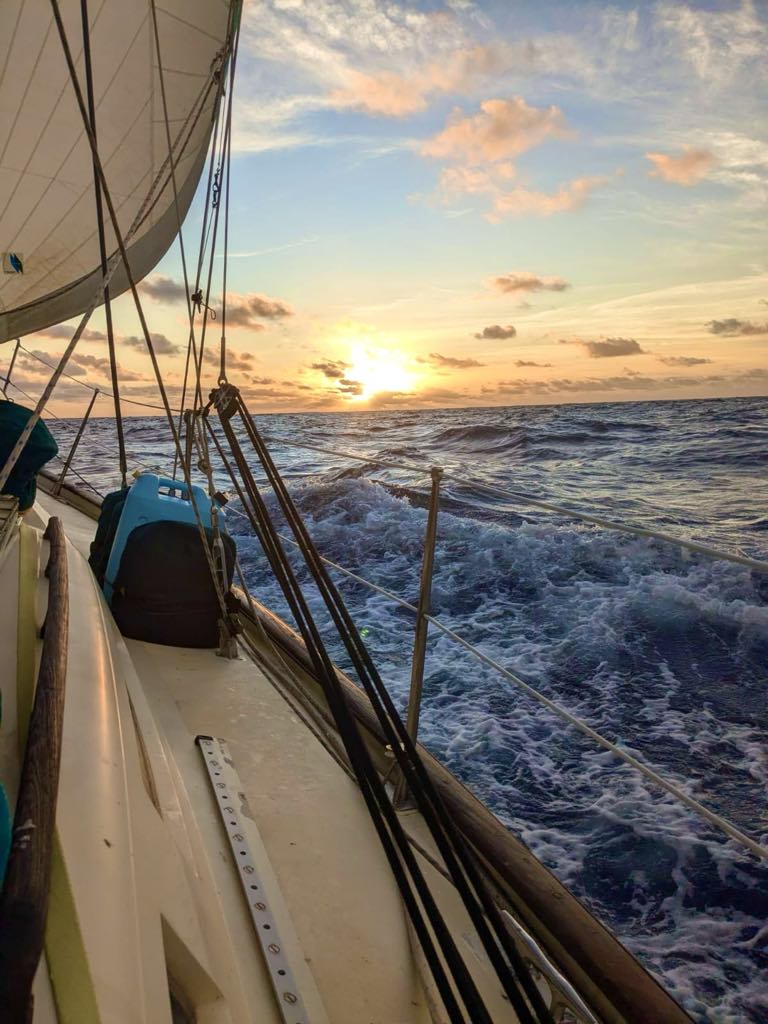
The forecast called for multiple days of 20 knot winds and 8 to 9 foot seas. It was horrible at first. I would tear up as I took the helm, knowing Dan couldn’t go all day without a break. The rolling waves caused the boat to toss first in one direction, then the other. It took great effort to get back on course. You had to be careful not to oversteer or understeer, as that would create havoc with the course and be hard to correct. At first, I could only steer for ten to fifteen minutes before I was exhausted and totally at my wits’ end.
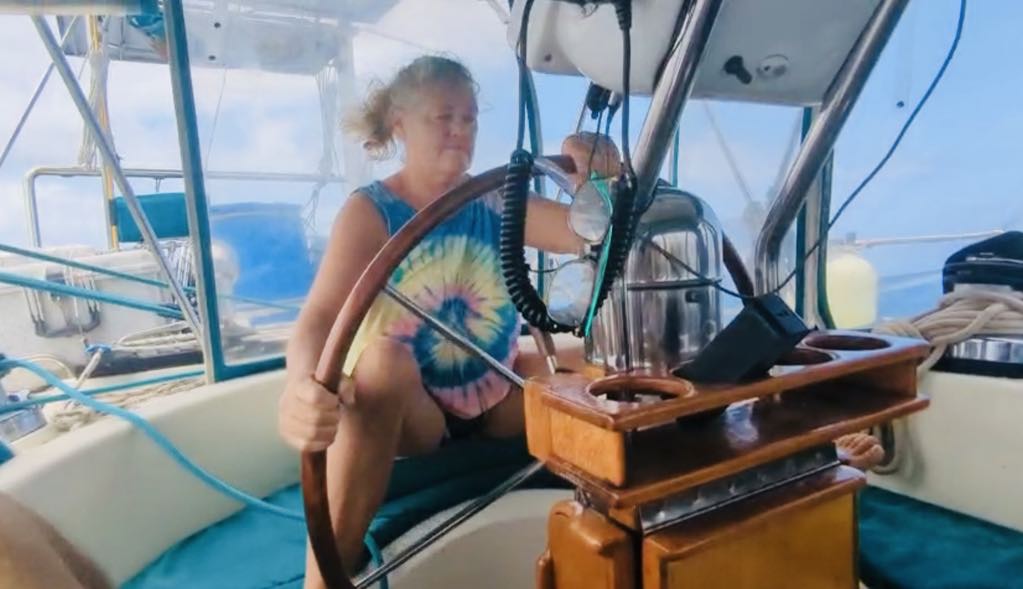
Slowly, after several days of hand steering during the day and heaving to at night, I became more accustomed to the process. I could relax and focus on the compass. I was able to predict how much effort it would take to correct the course without oversteering. Then, I had an epiphany. It took losing our autopilot for me to learn how to steer our boat. I had to laugh out loud when I finally realized – after seven years of avoidance – I can sail!
Resilience and Growth
This, our toughest crossing in seven years, has tested me. Terrified of hand-steering in rough weather, I’ve now grown accustomed. We still heave to each night, which will stretch the voyage out a little longer, but save my sanity. Since it is so difficult to cook in rough seas, meals are now once daily supplemented by snacks. Adaptation isn’t so bad. I’ve learned I can conquer fears, learn new skills, and thrive. This journey, through bad, good, and in-between, has built my strength and resume.
Gratitude and Looking Ahead
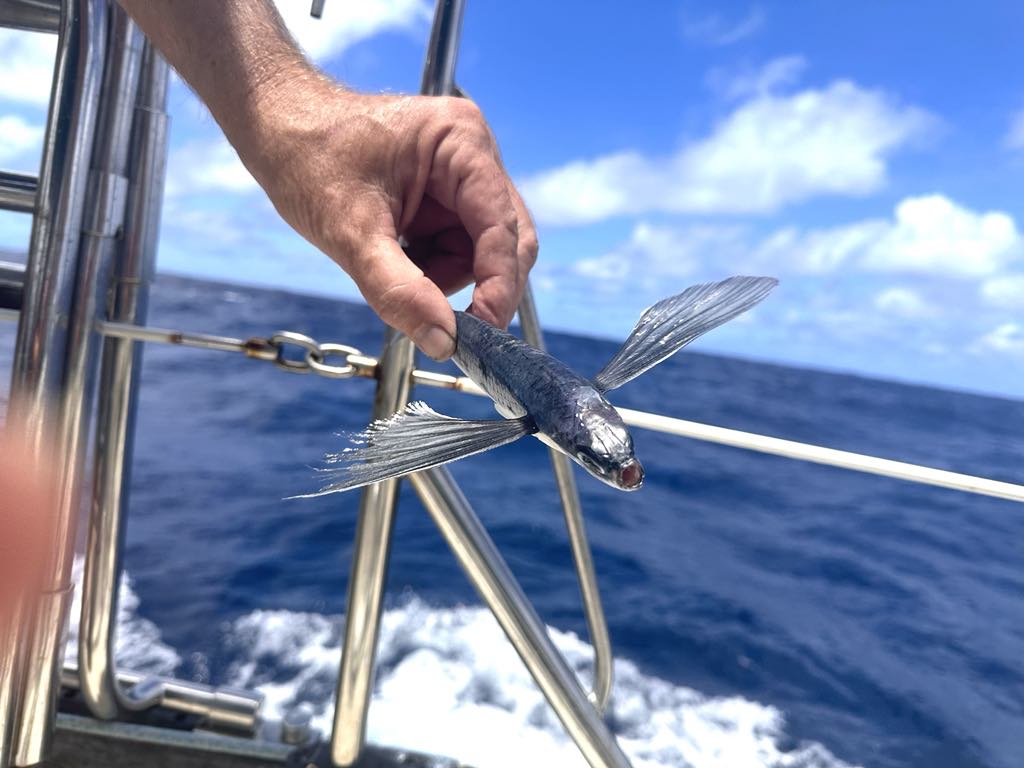
500 miles from French Polynesia, we decided to celebrate every 100 miles achieved. Starting with five flying fish at five hundred miles, we will have a ritual celebrating the ticking off of another hundred-mile mark. Check out our Sailmates Facebook page to see the videos.
With four days to land, I’m eager to share arrival stories. Thanks to our hundreds of friends for prayers, confidence, and well-wishes. This overwhelming support has eased our Pacific solitude. We never feel truly alone as we bob along in this endless horizon of blue waves. Join Sailmates for our 400-mile marker ceremony this afternoon. Love you all!
Fair Wind Our Friends,
Captain Dan and First Mate Alison
S/V Equus