
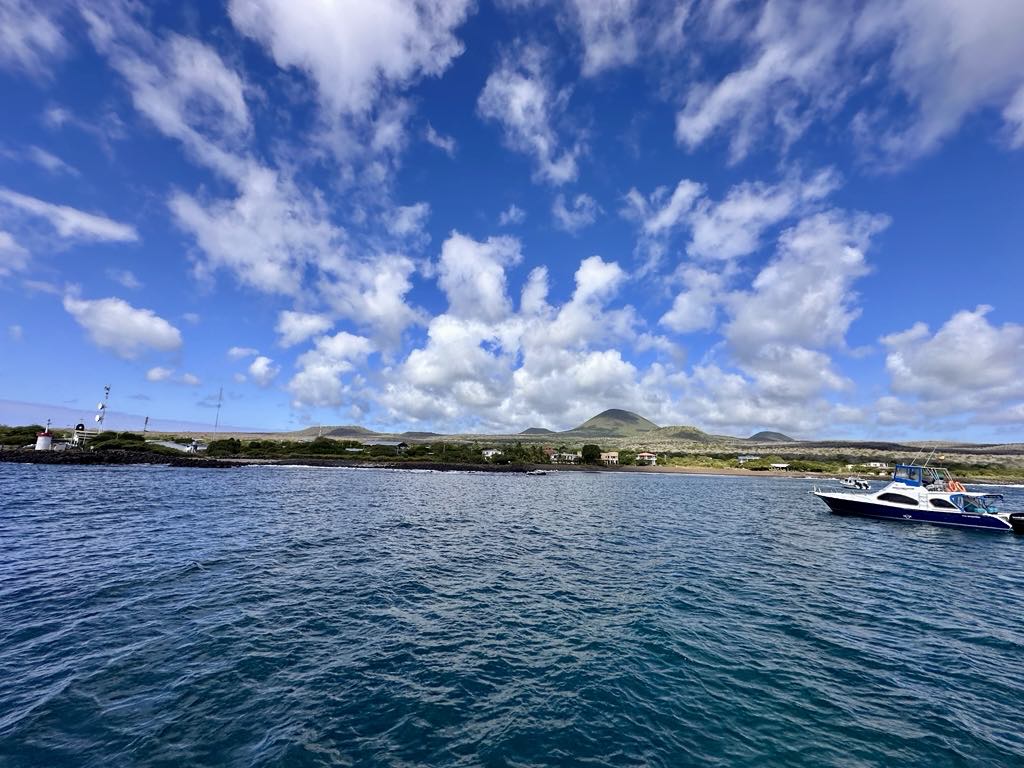
It was time for our much-anticipated visit to our second Galapagos Island. We departed Santa Cruz at 8:00 AM for the island of Floreana by small ferry. The ride was rocky, a 90-minute overwater rocket where some of the passengers lost their breakfast. Thankfully, our time in rough seas made us immune to the choppy ride.
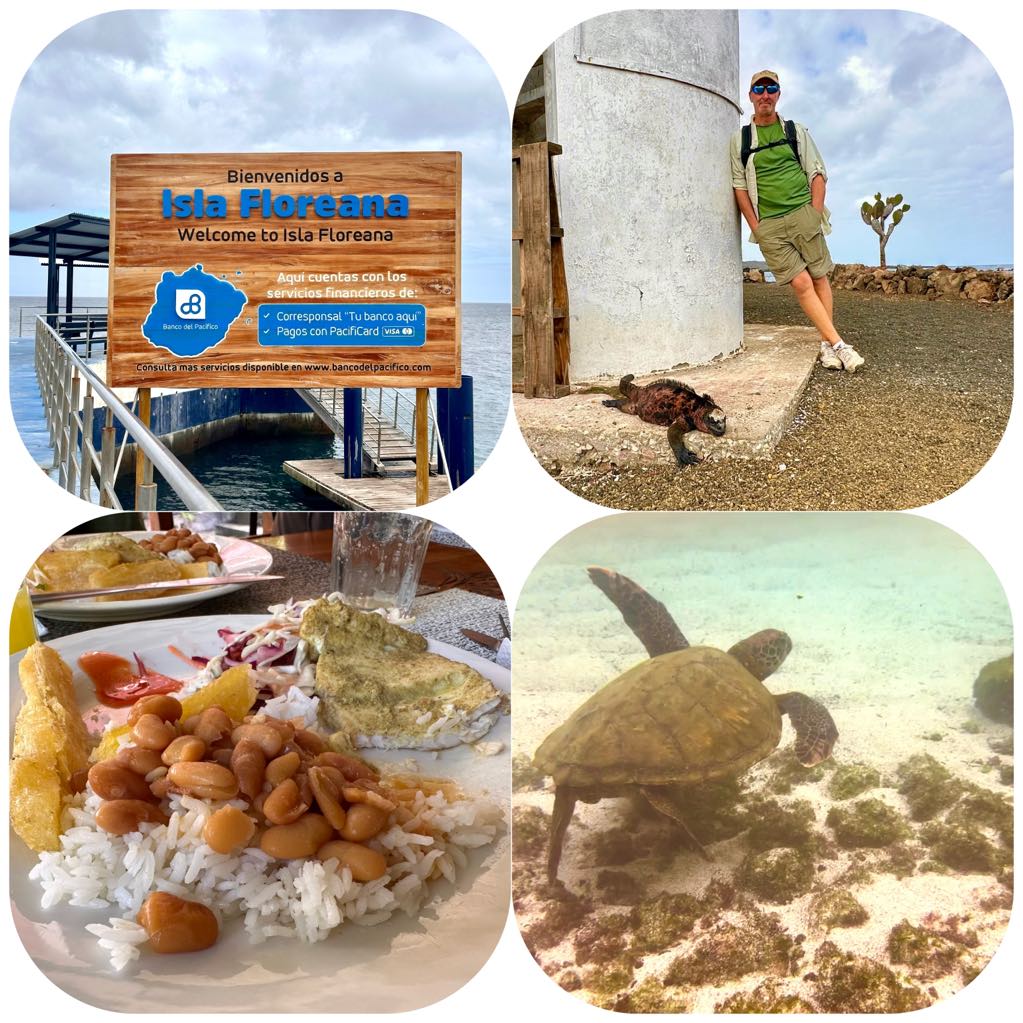
There isn’t much civilization on this island, small, rustic homes with rugs for doorways, and tiny businesses with rough-hewn, hand-carved signs. When we arrived at the ferry dock, we were greeted by sleeping sea lions, pelicans, and volcanic rocks covered with marine iguanas, one of the only places in the world where these prehistoric iguana mutations thrive.
Our guided itinerary included a brief snorkel trip in a sandy cove to see turtles and other sea life. We were transported by a vehicle resembling a military truck – something durable enough to navigate the rough, unpaved, rock-covered roads. Next, we were treated to an authentic meal for lunch of fresh fish, rice, and crispy yucca fries in a small eatery with a tree canopy for a roof.
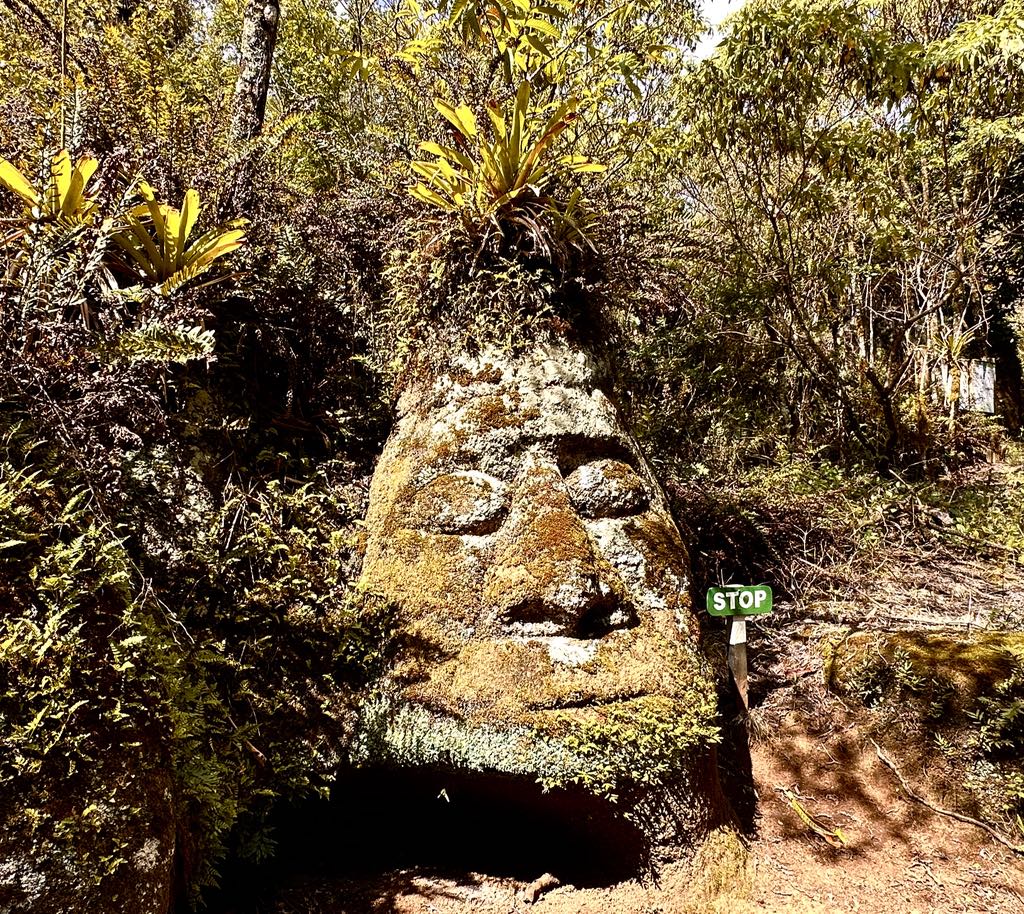
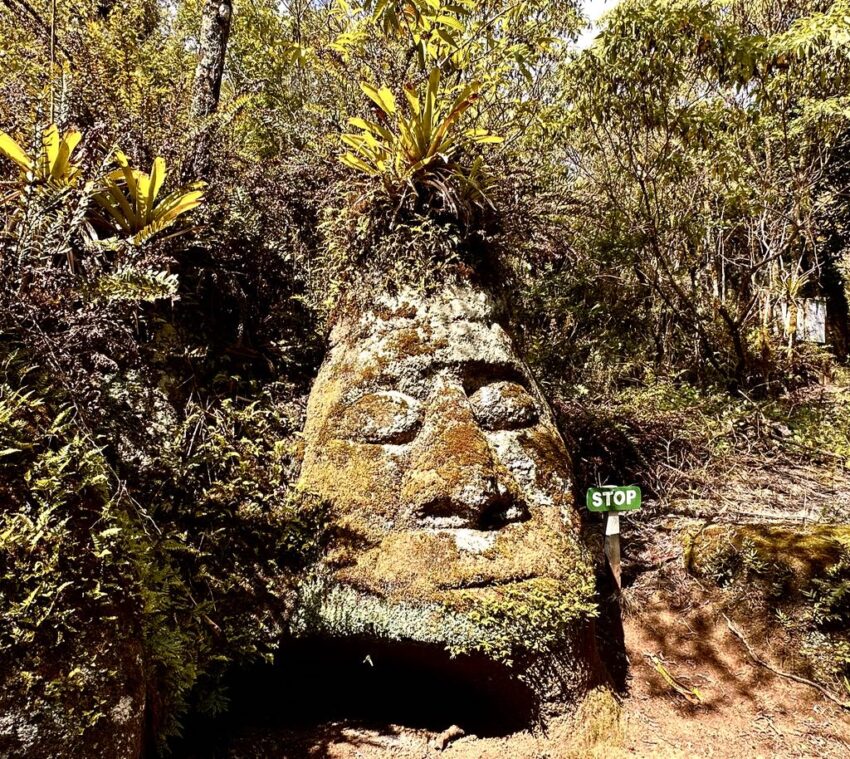
Then, we were taken to the top of the island, winding through volcanic mountains, to see the Floreana tortoise preserve and hear the stories of the people who once dwelled in that very location. Remnants of their lives are still present not only in the caves and primitive dwellings, but in the whispers of madness and murder, uttered by those whose descendants lived the story.
A brief history of Floreana
Long before settlers carved gardens or baronesses claimed thrones, Floreana Island was a haven for pirates who roamed the Pacific in the 17th and 18th centuries. These seafarers valued the island not only for its freshwater springs but especially for its abundant giant tortoise population. The tortoises, slow-moving and docile, were ideal provisions—they could survive for up to a year without food or water, making them living meat lockers aboard ships. Pirates harvested them by the hundreds, storing them in ship holds and consuming them slowly. They ate the rich, fatty meat, prized the oversized liver, and boiled the carcasses and shells to render oil used for cooking and lamp fuel. Their relentless hunting devastated the tortoise population, bringing them to the brink of extinction and forever altering the island’s fragile ecosystem.
It was the last of the pure Floreana species of giant tortoises that we were visiting. Once thought lost forever, the Floreana giant tortoise was declared extinct in the 1800s after pirates and whalers decimated the population. However, in a surprising twist, scientists discovered over 100 tortoises on nearby Isabela Island with Floreana DNA, likely descendants of animals dropped there by sailors centuries ago. Using these genetic clues, conservationists have begun a breeding program with more than 200 individuals, aiming to one day return a thriving population to Floreana and bring a lost species back from the brink.
“Why?” might you ask, would the pirates drop the turtles off on another island? It’s simple, really. They found bigger turtles, dropped off the smaller versions, and added the larger animals to their food larder. Simply, economics.
Now for the story.
*****
Before typewriters tapped in the dark and love triangles decayed under the equatorial sun, there was a man named Patrick Watkins. Marooned by his shipmates in the early 1800s, Watkins refused to die. He cultivated a meager garden and bartered with passing sailors, growing wiry and sun-baked in the highland mists. Some stories say he talked to ghosts. When he finally vanished, stealing a ship and abandoning his would-be rescuers on the island, he left only a legend, the very one that inspired Robinson Crusoe.
More than a century passed before new footprints marked the island’s black sand beaches. In 1929, Dr. Friedrich Ritter, a stern man with a cold intellect and a fanatical devotion to the philosophies of Nietzsche, arrived with his lover, Dore Strauch. She had left a husband behind in Berlin, walking away from her marriage in pursuit of a life stripped of society’s rules. Ritter was fleeing the Nazi regime. Ritter had all their teeth removed before departure to avoid dental problems. He engineered a crude metal chewing device that clacked like bones when they ate. They believed themselves to be pioneers of a new Eden—self-made, self-sufficient, and above all, superior.
They were alone for a time, their days shaped by hardship and silence. But isolation breeds not only self-reliance, it breeds illusion, and the illusion of control was the first to crumble.
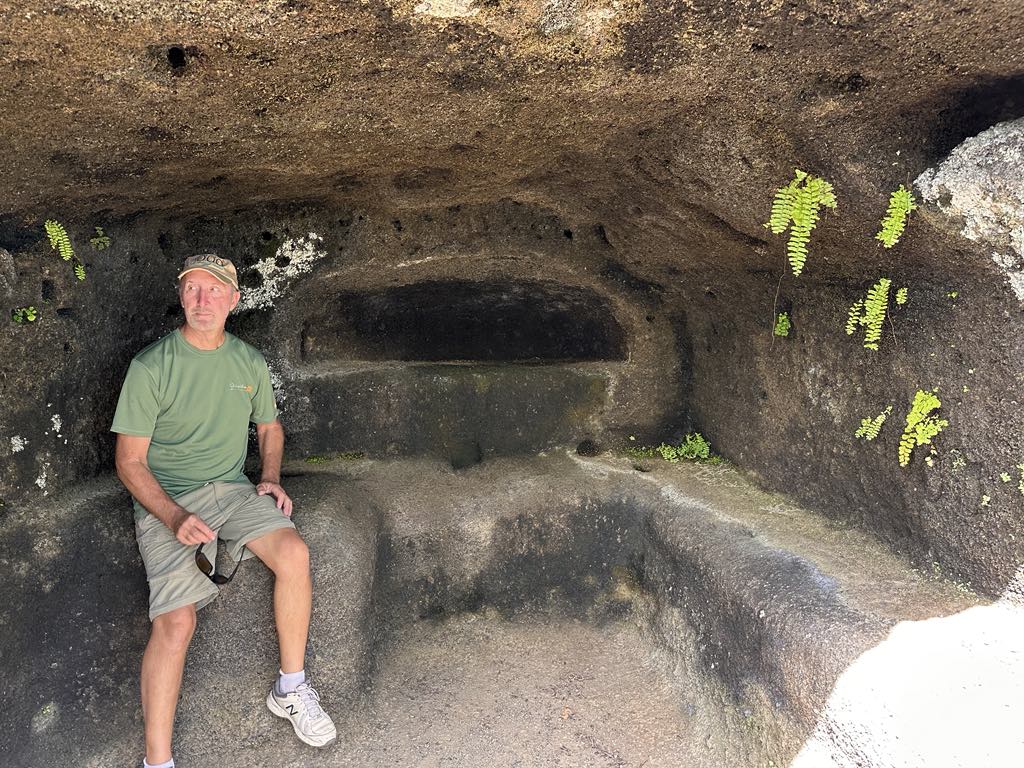
The chaos began when the Wittmers arrived. Fellow Germans, Heinz, a pragmatic man with work-worn hands, and Margret, pregnant and carrying a family history she’d buried beneath layers of Protestant respectability. Her mother, the whispers went, had once stood trial for a poisoning. The records were lost, sealed, or burned, but rumors lingered like the island’s sulfur stench. The Wittmers planned to build a home near the highland spring. In the meantime, they lived in the caves that had been used as dwellings by previous inhabitants. Their baby boy was born on the stone bed in one of the caves. The first known child to be born on Floreana, the Wittmers refused to leave.
Ritter continued to ask the Wittmers to leave. This was their island. Fights erupted between the two families. Some battles involved violence and near-death experiences by poisoning. Ritter and Dore held fast. Meanwhile, things were about to get more complicated when a third party arrived, even more notorious than the first two families, the Baroness.
She arrived in 1932 on a boat of lies and charm, accompanied by two lovers and a pistol that never left her side. Eloise Wehrborn de Wagner-Bosquet had escaped a European prison—smuggled out by one of the very men who now carried her bags—and declared herself monarch of Floreana. Formerly a high-end prostitute to the elite, she had amassed wealth. She spoke of building a grand hotel, of turning the island into a tropical paradise for the elite. The only things she brought that were real were chaos and seduction.
Everyone smiled through clenched jaws.
The visitors came next, reporters, sailors, the occasional botanist, drawn by tales of the so-called “Empress of the Galápagos”. The Baroness played her role well, posing dramatically against volcanic backdrops, twirling her pistol, recounting tales of royalty and romance with the exaggerated flair of a serial liar. Ritter brooded. Dore Strauch suffered migraines and wrote bitter entries in her journal. Margret knitted and watched.
It was not long before the island’s tensions boiled over. Whispers turned to screams.
One day in 1934, the Baroness vanished. Her remaining lover claimed she had sailed to Tahiti with a Norwegian yachtsman. No such boat was ever seen. No farewells were given. The islanders—especially the Wittmers—shrugged off the disappearance with unsettling calm. The lover fled soon after. He and the fisherman who took him were later found dead, mummified by sun and salt on a distant, uninhabited island. No one could explain how they’d gotten there.
Later that year, Ritter died from what Strauch claimed was food poisoning, bad chicken, she said, though no one could recall ever seeing chickens on their farm. Margret Wittmer, always helpful, had prepared the final meal. The Ritter chewing device was found beside his corpse, clenched around an unchewed bite. Strauch left the island not long after, never to return.
Then came the hunter.
Assigned to Floreana by the Ecuadorian military to monitor the settlers and their supply lines, he was given a rifle and a notebook. He was quiet, observant. He asked questions that the others preferred not to answer. He was last seen walking toward the highlands with his gun slung over his shoulder. Days passed. The island was scoured. No gun. No boots. No body. The military scoured the island but never found his remains.
Still, the tourists came.
One group, made up of foreign reporters eager for a story, landed in the dry season. They hiked inland, asked their questions, and prepared to leave by mid-afternoon. All but one. A young, ambitious woman stayed behind to press Margret Wittmer for more details. Some say she was asking about the Baroness. Others say she brought up the hunter. Margret, smiling thinly, pointed her toward the trail back to the harbor.
She never arrived.
A search was mounted. The trail was marked, the landscape open. No sign, it was as if the island had simply swallowed her whole.
The Wittmers stayed. They raised their children on Floreana. Margret wrote a book of her own, telling her version of events with the clean simplicity of someone who had nothing to hide—or who had already hidden everything well. Generations passed. The lava fields softened with scrub and time, and the ghosts grew quieter.
*****
These were the stories being told by our guide as we walked through the tortoise breeding grounds, where the last few native tortoises of Floreana are being protected. We got bits and pieces of the story as we wandered around the caves used by pirates, Patrick Watkins, and the Wittmer family. We sat on the stone bed where their son was born, the first human born on Floreana.
When I asked our guide, “Where did you learn the stories?” He smiled. He told me that he was born in Santa Cruz, but he knows the relatives of those who lived on Floreana. Over the many years, he spent hours talking to people like the 90-year-old woman who was a direct descendant of the Floreanians. He knows several relatives of those who once lived there, and he listens carefully to what they have to say.
I asked him, “Is this all written down somewhere?”
He shook his head. “No. No one has written down all that is known, the stories that go beyond what I have told you.”
I’m sure many of the details will never be revealed. Bones will stay hidden. The remnants do tell tales, and the island will remember. It always does.