
Fixing Boats, Finding Friends
Island Choices and Shifting Plans
To recap, French Polynesia consists of five island groups, each with its own vibe. The Society Islands, arguably the most well known, with Tahiti, Moorea, and Bora Bora. With volcanic peaks, turquoise lagoons, and resorts that scream luxury. Second might be the Marquesas, popularized by the Crosby, Stills, Nash song “Southern Cross”, with islands similar in appearance to the Society Islands with names something akin to Fatu Hiva, or Nuku Hiva. To their west and south are the Tuamotus, a chain of low lying atolls like Rangiroa and Fakarava, each a diver’s paradise with pearl farms galore. The eastern most islands are in the Gambier archipelago, making them, along with the Marquesas favorite landfall destinations for cruisers. And last, and also sort of least, are the Australes which are furthest south and considered to be too out of the way for most sailors. When we departed Panama, we were headed to Gambier Island but shifting wind and dicey weather sent us to land in Hiva Oa one of the islands in the Marquesas.
Hiva Oa Haven
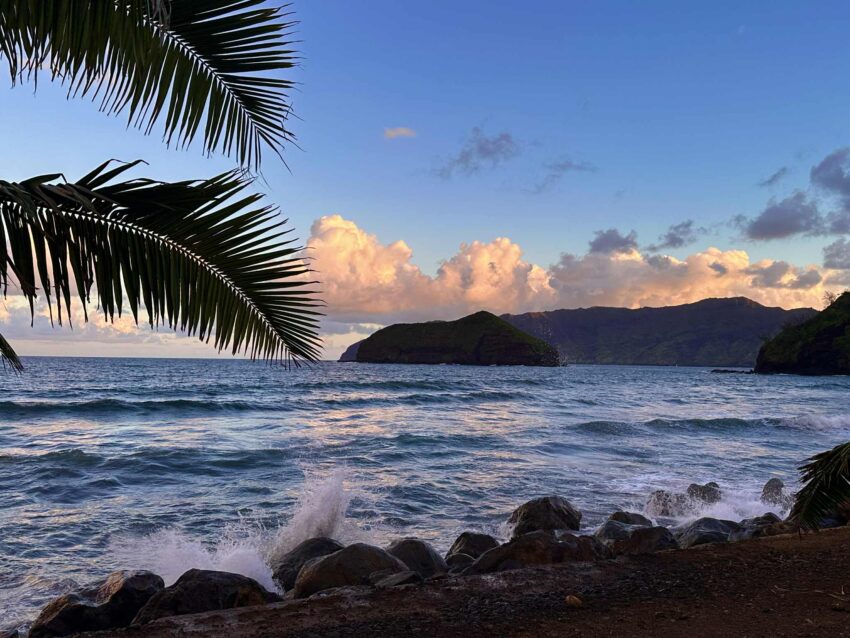
Hiva Oa became our home base. Dan, my superhero, yanked the autopilot out and shipped it to Tahiti for repairs. We were optimistic it would be deemed broken, a new one would be sent, and we would be good to go. Unfortunately, that scenario was not in the cards.
The dealer in Tahiti told us the unit worked fine when he tried it out. His only finding was a worn belt, not broken, but one that looked worse than it should for being a year old. Dan was dubious as he had performed the exact same test on the unit directly after pulling it out, and there was no movement from the arm linkage when he energized the motor. Dan asked for them to conduct a more thorough inspection, but in the end they just replaced the belt under warranty and shipped the unit back.
We had a few lovely weeks in Hiva Oa with our friends Eric and Jossie on S/V Abayomi. Then sadly, they moved on, leaving us alone once again, waiting for our autopilot to arrive.
Even being captive, the island’s charm is undeniable. The locals live in this peaceful, almost magical harmony. There are no speed limits outside the main town, no police cruising around, and crime’s basically nonexistent.

Everyone greets each other, kids splash in the sea without a phone in sight, and tattoos cover nearly everyone, a badge of pride here. Called “tatau,” these tattoos, born in Polynesia, mark genealogy, status, achievements, and spiritual protection. Banned by missionaries in the 19th century, they roared back in the 1980s, and in the Marquesas, 80-90% of adults here have them, linking them to their ancestors.
A Dental Scare and Healthcare Surprises
Watching our sailing buddies jet off to dive in crystal waters and explore atolls stung as we were stuck once again, always the bridesmaids. Then, another crisis! Dan cracked a molar, a jagged mess that couldn’t wait. Everything here costs a fortune, so we braced for a hit as we trekked 5 miles round trip into town, a hike we do a couple of times a week. We found a tiny dental office, and when we barged in, the dentist’s wide-eyed stare made me think we’d screwed up big time. I blurted out in French about Dan’s emergency, and after a tense moment, he ushered Dan through a side door.
Ten minutes later, Dan was back, grinning. The dentist drilled, no Novocain, and slapped on a temporary filling, then dropped the bombshell: dental care’s free here. French Polynesia’s healthcare, tied to France’s universal system via the Caisse de Prévoyance Sociale, covers residents’ medical and dental needs across all islands, though Tahiti has fancier setups than Hiva Oa’s basic clinics. Tourists like us usually need insurance, but emergencies like this? Covered. We lucked out.
Boat Troubles: The Autopilot Saga
They say cruising is just “fixing your boat in exotic places.” Turns out, they weren’t kidding.
Finally, the day arrived—we got the tracking info for our long-lost autopilot. It was landing Saturday. The airport was way too far to walk, so we looked for a taxi . Our taxi coordinator cheerfully told us, “No problem! Just pick it up Sunday morning between 7:30 and 8:00 at the Air Tahiti office in town.”
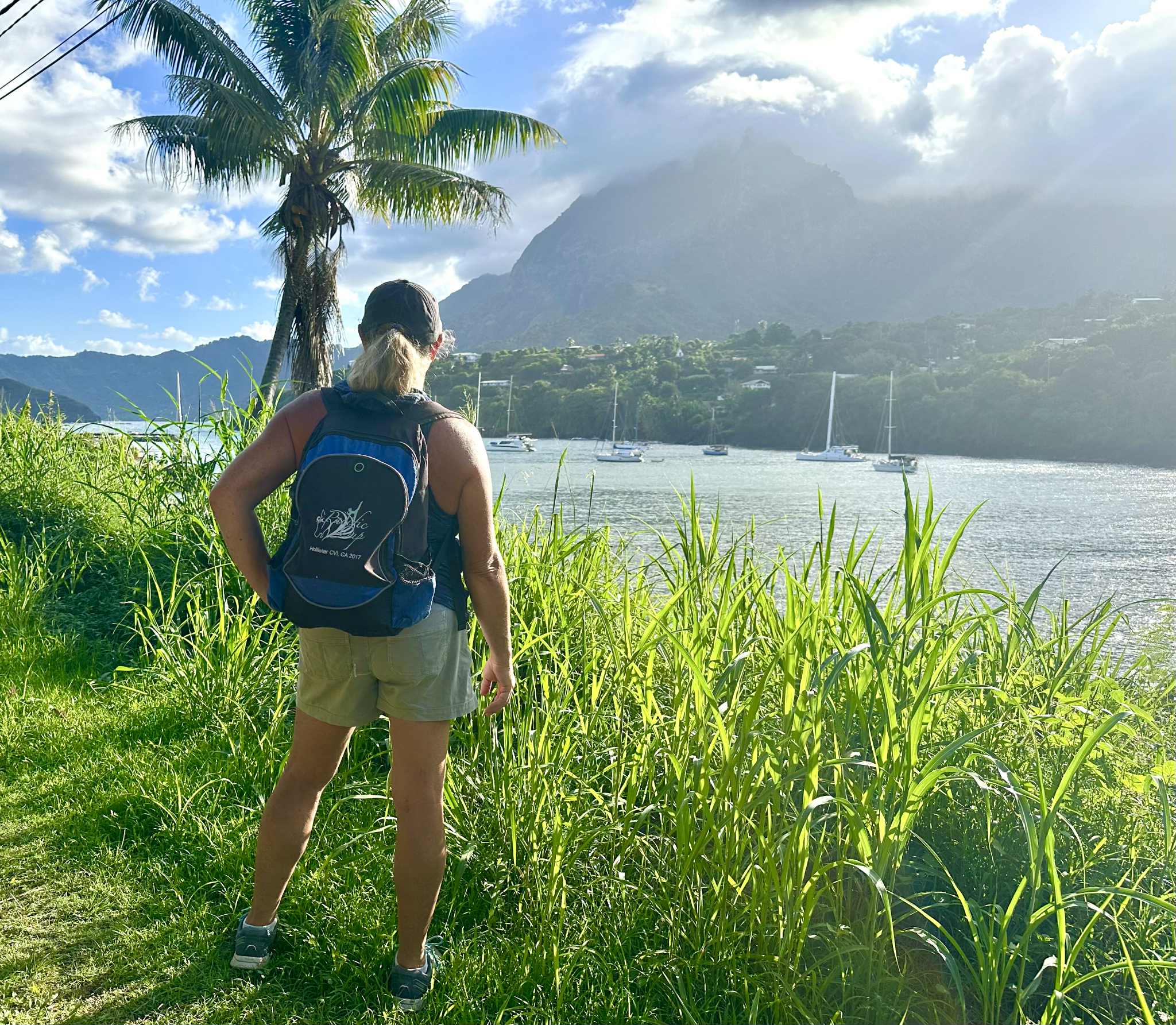
Great! We set the alarm, hiked in early, and sat on the curb waiting. Locals passing by shook their heads. “That office isn’t open Sundays.” By 8:15, with no cars in the lot and not a soul in sight, we had to admit defeat. Ten points for exercise, zero for progress.
Monday we tried again. After an hour in line behind ticket buyers, we finally reached the counter—only to be told this wasn’t the shipping office. The real office? Back near the grocery store. Another trek later, we found the tiny building, locked tight. The posted hours mocked us: Sunday 7:30–8:00, Monday 8:00–10:00. My phone read 10:08. We had missed it by eight minutes. Ten miles of walking—still no package.
On Tuesday, Dan went solo. Two hours later, he returned triumphant, autopilot in hand. Total effort: 15 miles of walking, one boat marriage still intact.
Installation was its own circus. Dan dismantled our bed, crawled into lockers, muttered some very creative language, and emerged with bloody knuckles—but the unit was in. We hit the test button. The progress bars climbed, hope soared… then the dreaded beeping. Failure.
When Dan called the dealer, we learned Tahiti couldn’t authorize a replacement. That required Australia. And Australia? Off at a conference for a week. Shipping it back wasn’t an option—after the $160 price tag last time, no thanks.
Eventually, corporate granted Dan the “privilege” of repairing it himself. They sent the specs, he tore it apart, worked his magic, and reinstalled it. This time, it worked. Cue victory dance.
Of course, two days later, the pump on our watermaker quit. On an island with no potable water. Engine leaking oil. No choice but to buy drinking water—expensive, heavy, and a royal pain.
Because on a boat, it’s never if something breaks—it’s when.
The Great Reunion
While we were stuck in Hiva Oa dealing with boat drama, our old cruising buddies—S/V Whatever She Wants, the Yoccums (you might remember them from our book Riding the Waves of Reality)—were on their way to the Marquesas. It had been three years since we’d sailed together, and we were over the moon about the reunion.
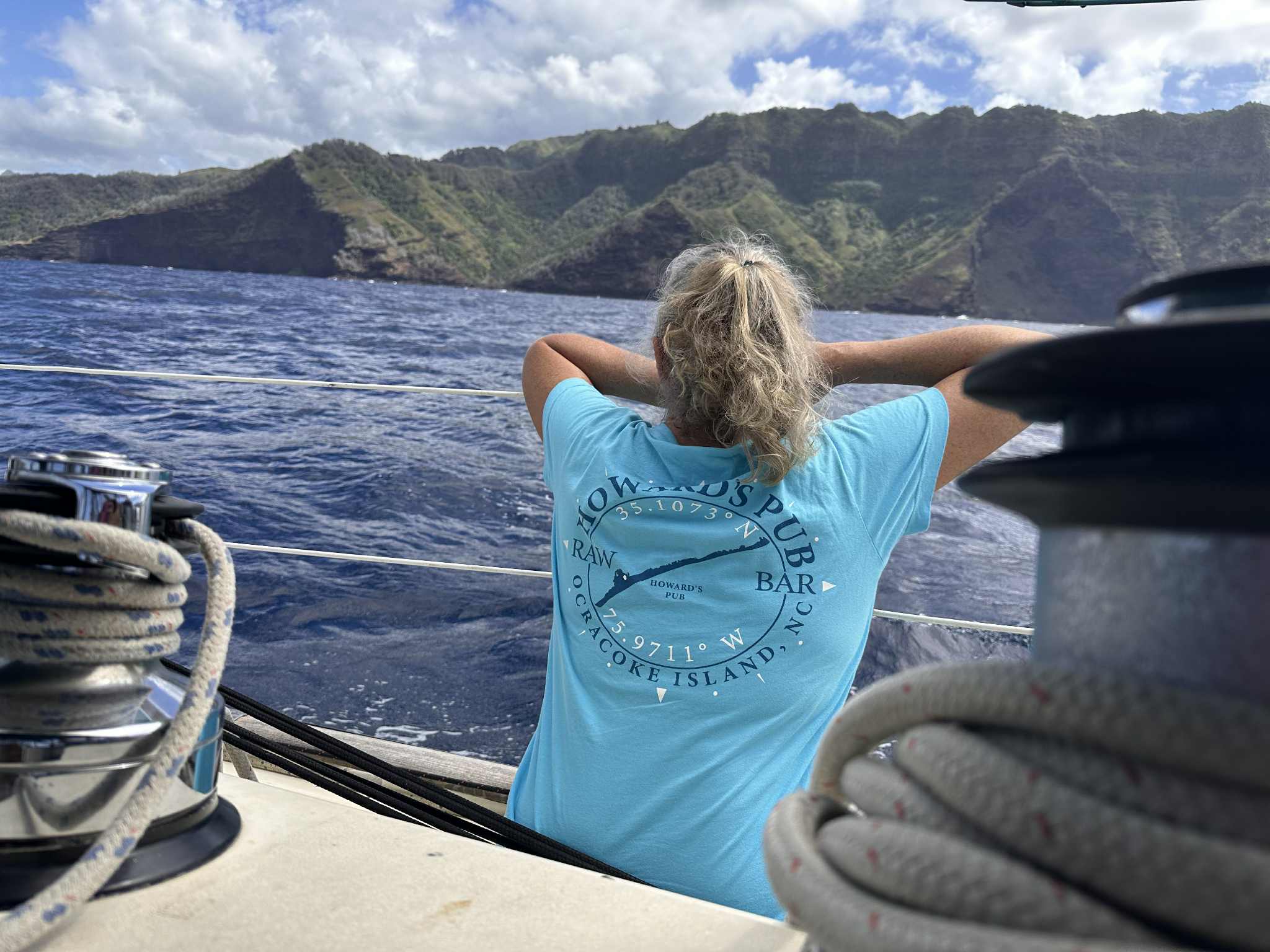
As luck would have it, the wind carried them straight to Fatu Hiva—the very island we had planned to visit before all our breakdowns sidelined us. So we stocked up on bottled water, hoisted the sails, crossed our fingers as we fired up the newly repaired autopilot, and set course. Just like that, we were moving again. Nothing feels better than a boat under sail after weeks of frustration.
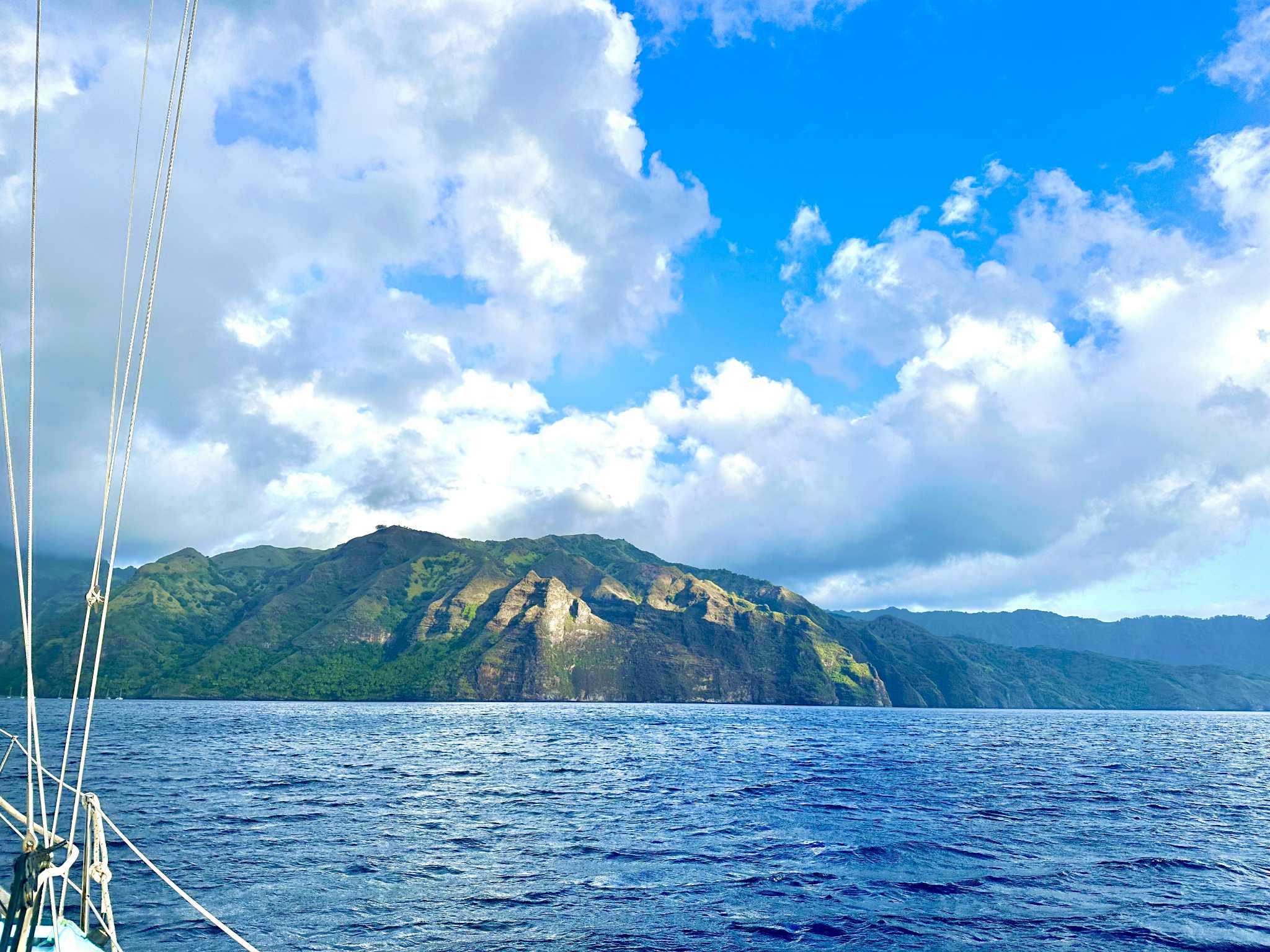
Fatu Hiva itself is a tiny jewel of an island, home to just 900 people—and one very important mission. Back in Panama, some Aussie sailors told us about their friend Sopi, a stone carver they’d befriended on Fatu Hiva in 2018. They’d promised him new carving discs, nearly impossible to get on such a remote island.
When they learned we were headed this way, they handed the mission to us. Our task: deliver them to Sopi and keep a promise alive across oceans. So, we carried those discs across the Pacific, and with our friends MaryAnn and Gary arriving the day after us, the timing was perfect. Together, we’d find Sopi and deliver his long-awaited treasure.
But the story of Fatu Hiva deserves its own spotlight. This island is rumored to have one of the most beautiful anchorages in the world, and from what I’ve seen so far—I believe it. I’ll share the photos and adventures in my next post. Spoiler alert: it involves long walks, hidden waterfalls, and even a few wild pigs. Stay tuned!
Fair Winds,
Captain Dan and First Mate Alison
S/V Equus