Our time in the Marquesas has been magical. We will be leaving our boat here for the holidays and traveling home to see our lovely children and grandchildren, cherishing every moment with them. Seeing the happy families in these islands makes us miss our own even more. I love watching children the same age as our grandkids, and wonder what they are doing half a world away.
There’s something extraordinary about the Marquesas. After days at sea, the first glimpse of land rising from the endless Pacific feels almost mythic – volcanic peaks wrapped in mist, cliffs carved by time, and a kind of wild beauty that seems untouched by the modern world. These islands – Hiva Oa, Tahuata, Fatu Hiva, Ua Pou, and Nuku Hiva – are among the most remote on earth, yet their people are among the most welcoming we’ve ever met.
Sailing between these volcanic islands is challenging — steep cliffs create fierce wind shears, the currents are strong, and the seas are often unpredictable. But the effort is always rewarded. The moment you drop anchor, the chaos fades. What remains is a sense of peace that seeps into your bones — a quiet reminder that beauty often lies just beyond the struggle.
Each island carries its own history, rhythm, and soul. Together, they form a culture that feels both ancient and alive, rooted in tradition but open-hearted toward those who make the voyage here from across the Pacific. Here is a brief history lesson of each of the islands we visited.
Hiva Oa – Island of Memory and Art
Our journey began on Hiva Oa, known as the “Garden of the Marquesas.” It’s a place of immense natural beauty and deep cultural resonance. The island is best known as the final resting place of Paul Gauguin and Jacques Brel, two artists who came here searching for meaning and found inspiration in its people and landscape.
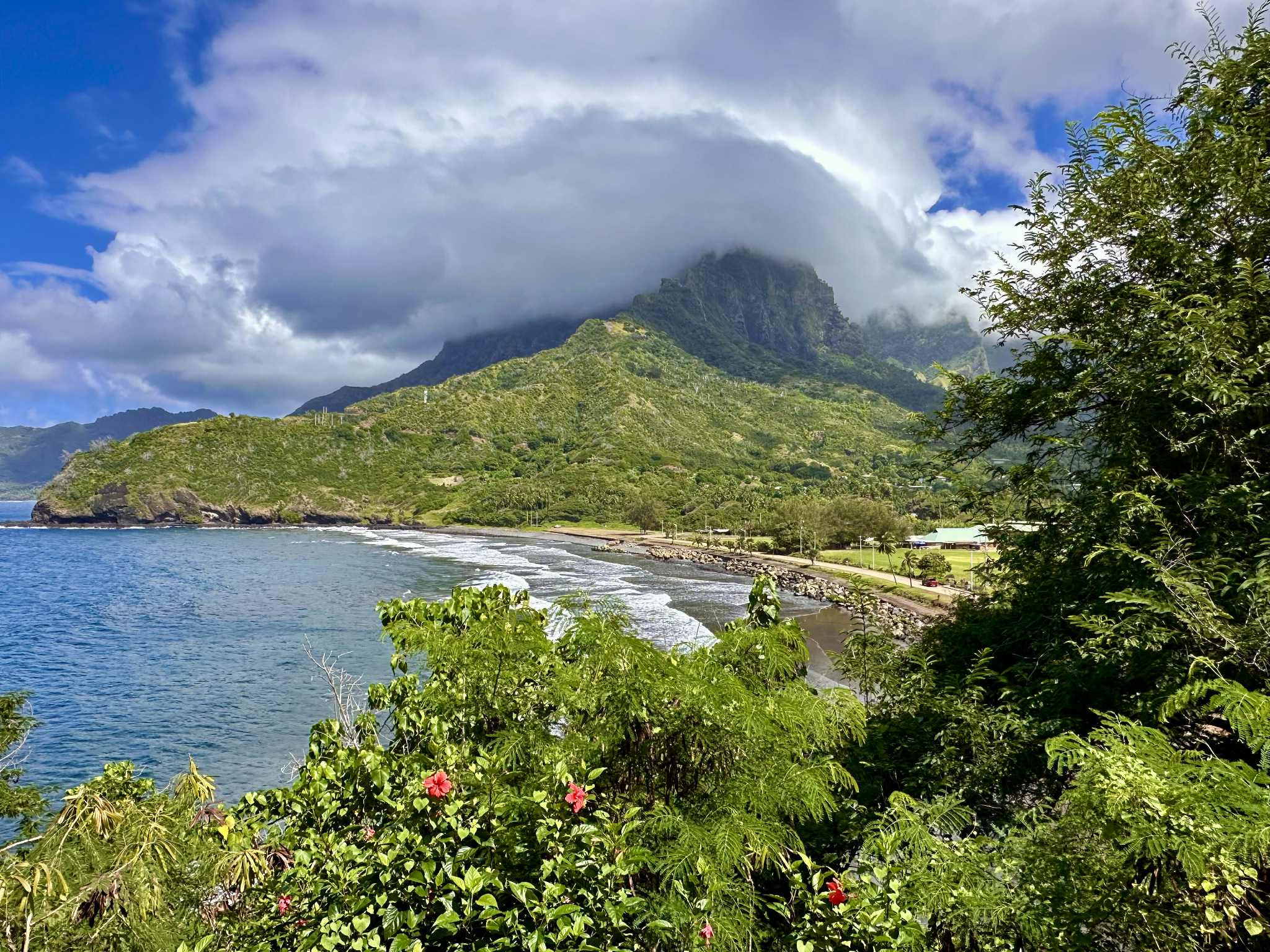
In the village of Atuona, we wandered narrow roads lined with breadfruit trees and simple homes. Life here is quiet, deeply connected to the land. The locals speak softly but carry a warmth that lingers long after you leave. Ancient stone tikis still stand watch over the valleys — silent reminders of a civilization that predates written history, where art and spirituality were one and the same.
Tahuata – Island of Light and Friendship
A short sail from Hiva Oa brought us to Tahuata, the smallest inhabited island in the Marquesas, but one of the most welcoming. Known for its intricately carved bone and rosewood jewelry, Tahuata is a place where craftsmanship thrives. Nearly every family here has a carving tradition passed down through generations. We were enthralled by their church service where there are no hymnals. Every song has been memorized and sung with an incredible blending of men, women, and children’s voices. Often, the men and woman sang different octaves making them sound like a professional choir.
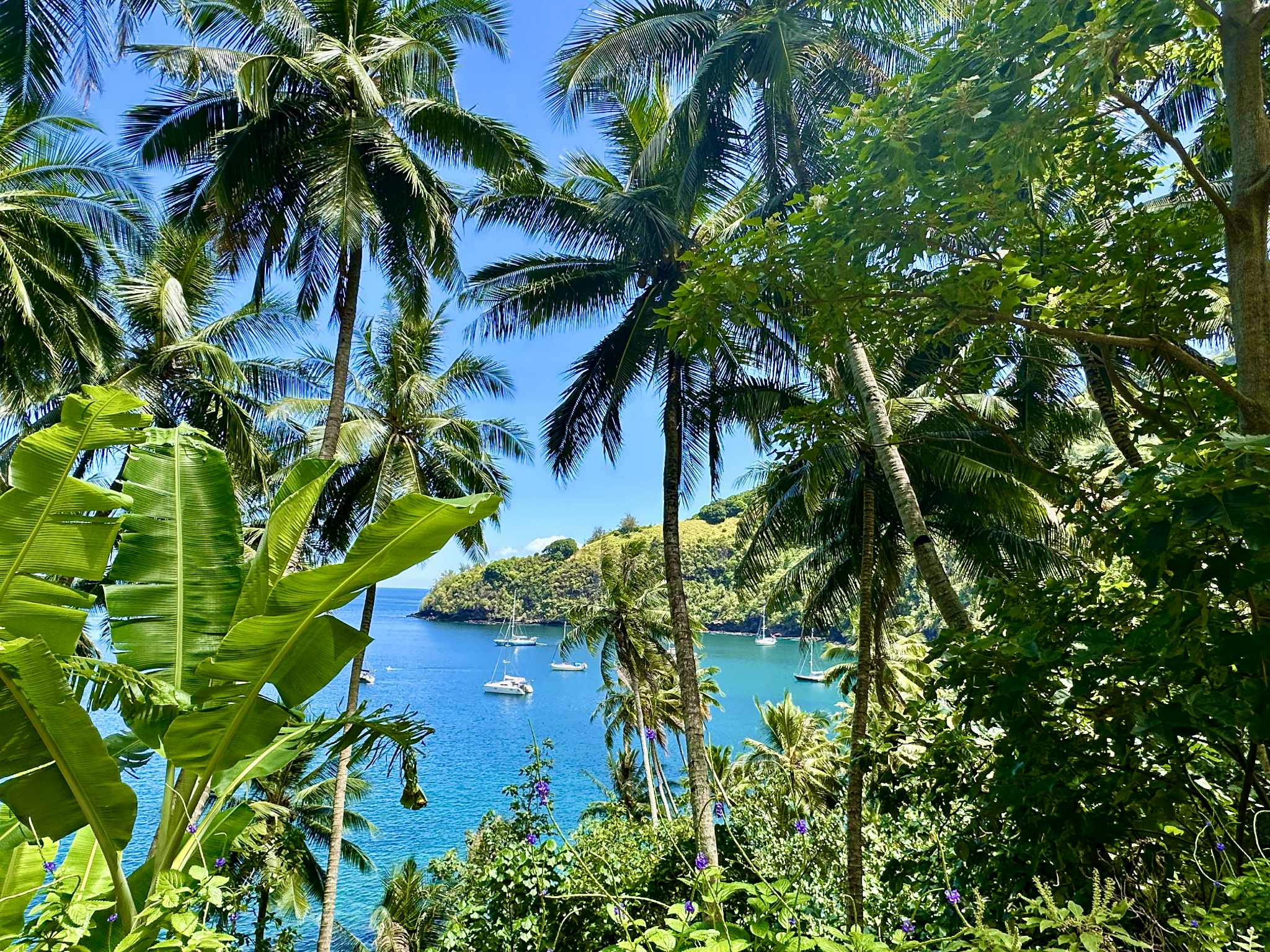
The island’s bays are calm, the water a clear, gentle turquoise. Spinner dolphins are prevalent here. The pod spent an entire day in our harbor, leaping and spinning theatrically right near our boat. We spent days snorkeling on the coral reefs and walking through villages where children laughed and waved from the doorways of homes that seemed more like open-air extensions of nature itself. It’s impossible not to feel at peace here. Tahuata embodies kindness in its purest form.
Fatu Hiva – Island of Handicrafts and Heart
Sailing to Fatu Hiva tested both our endurance and our faith. Surrounded by steep cliffs and unpredictable winds, the passage was rough – but what awaited us was worth every wave. Fatu Hiva is often called the most beautiful of the Marquesas, with lush valleys and waterfalls cascading down sheer rock faces. We feel the harbor in which we anchored is one of the most beautiful we have ever seen.
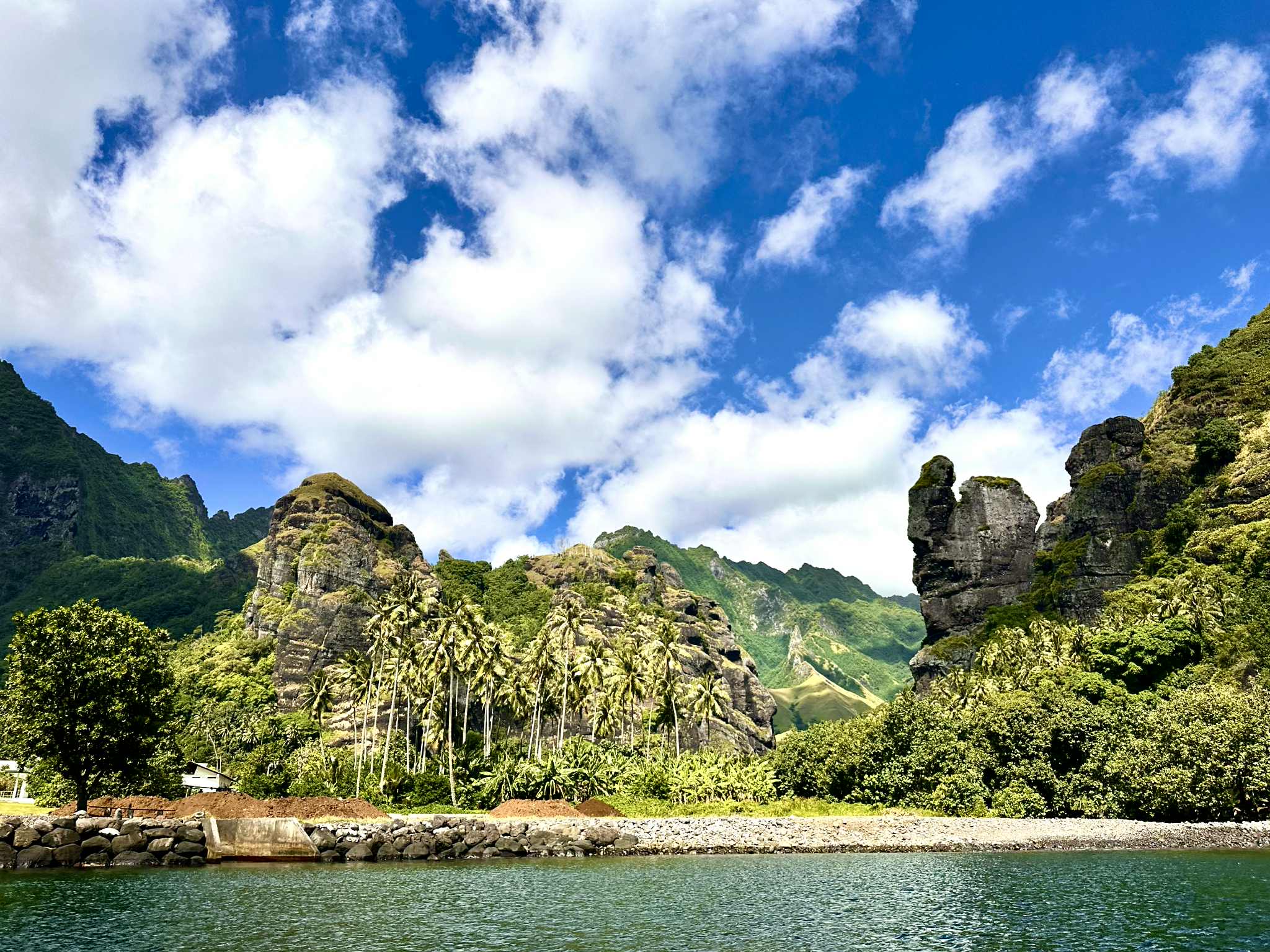
This island is renowned for its traditional tapa cloth, handmade from the bark of mulberry trees and decorated with natural pigments. The artistry is exquisite, and the people, proud keepers of a heritage that runs deep.
To thank us, Sopi invited us to a feast he prepared at his house, where we shared laughter, stories, and food cooked in an underground earth oven, including a wild pig hunted and caught in the hills the day prior, as well as fresh caught tuna, and vegetables and coconut grown on his land. It felt less like being a guest and more like being adopted into a family.
Oa Pou – Island of Pillars and Pride
Approaching Ua Pou, the first thing you see are the island’s dramatic basalt spires – tall stone sentinels rising like cathedrals from the green interior. It’s no wonder Ua Pou is known as the Island of the Stone Warriors.
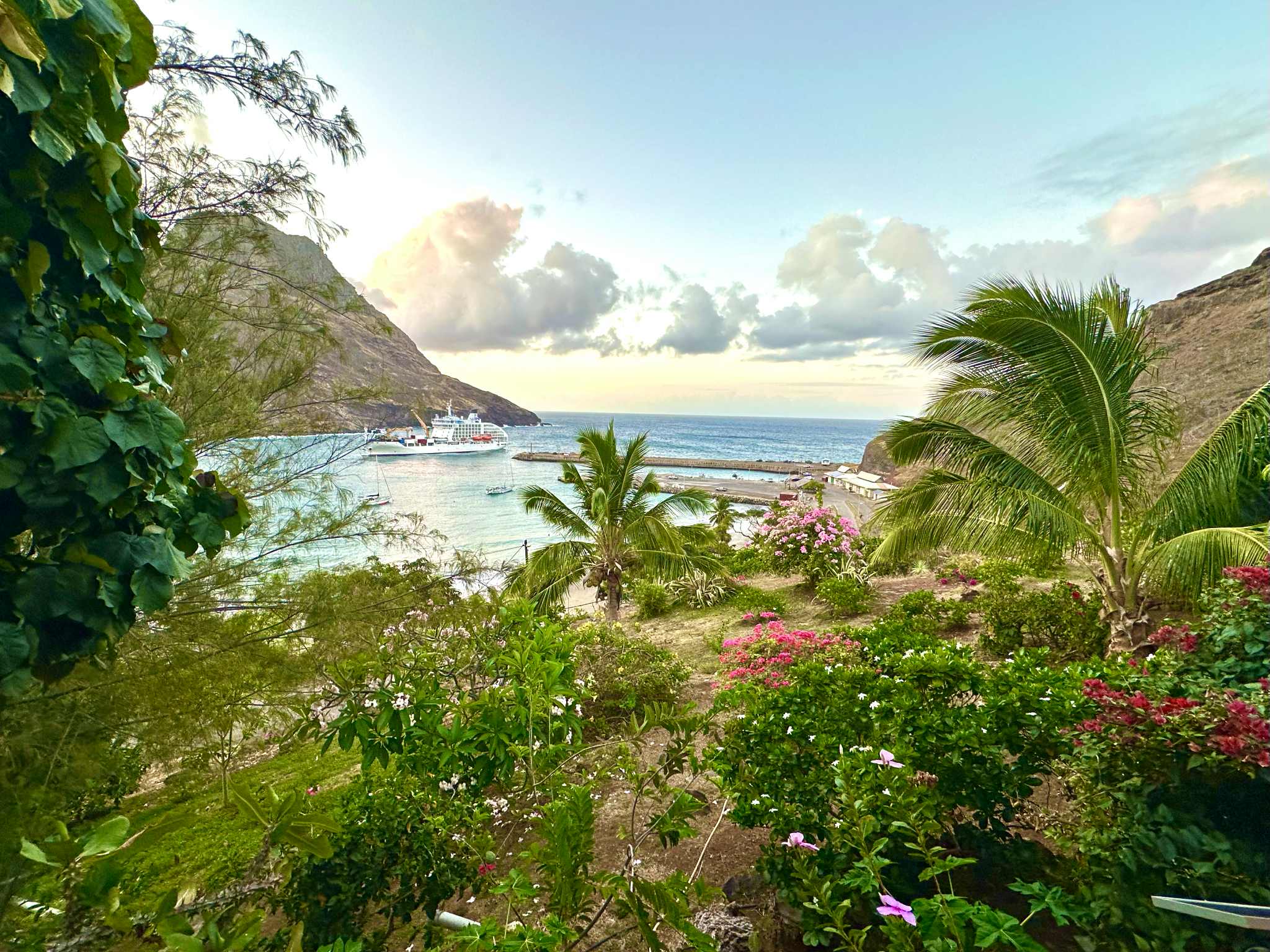
These towering peaks have become a symbol of Marquesan pride and resilience.
Ua Pou is a hub of traditional song and dance, and we were lucky enough to witness performances where drums shook the earth and the harmonies of ancestral chants filled the air. A young lady from Ua Pou won the Miss Tahiti contest for all of French Polynesia. Her small island was very proud of her accomplishment.
Despite the island’s rugged terrain, its people are among the most joyful and expressive we’ve met, their laughter echoing as freely as the trade winds that circle the cliffs.
Nuku Hiva – Island of Kings
Our final stop, Nuku Hiva, is the largest of the Marquesas and the administrative center of the archipelago. It’s often called the “Island of Kings” – a fitting name for a place of grand landscapes and rich legends. Deep valleys, cascading waterfalls, and archaeological sites mark the island’s past as the seat of powerful chieftains. It also has the airport where we will fly to Tahiti to get our connecting flight back to the USA.
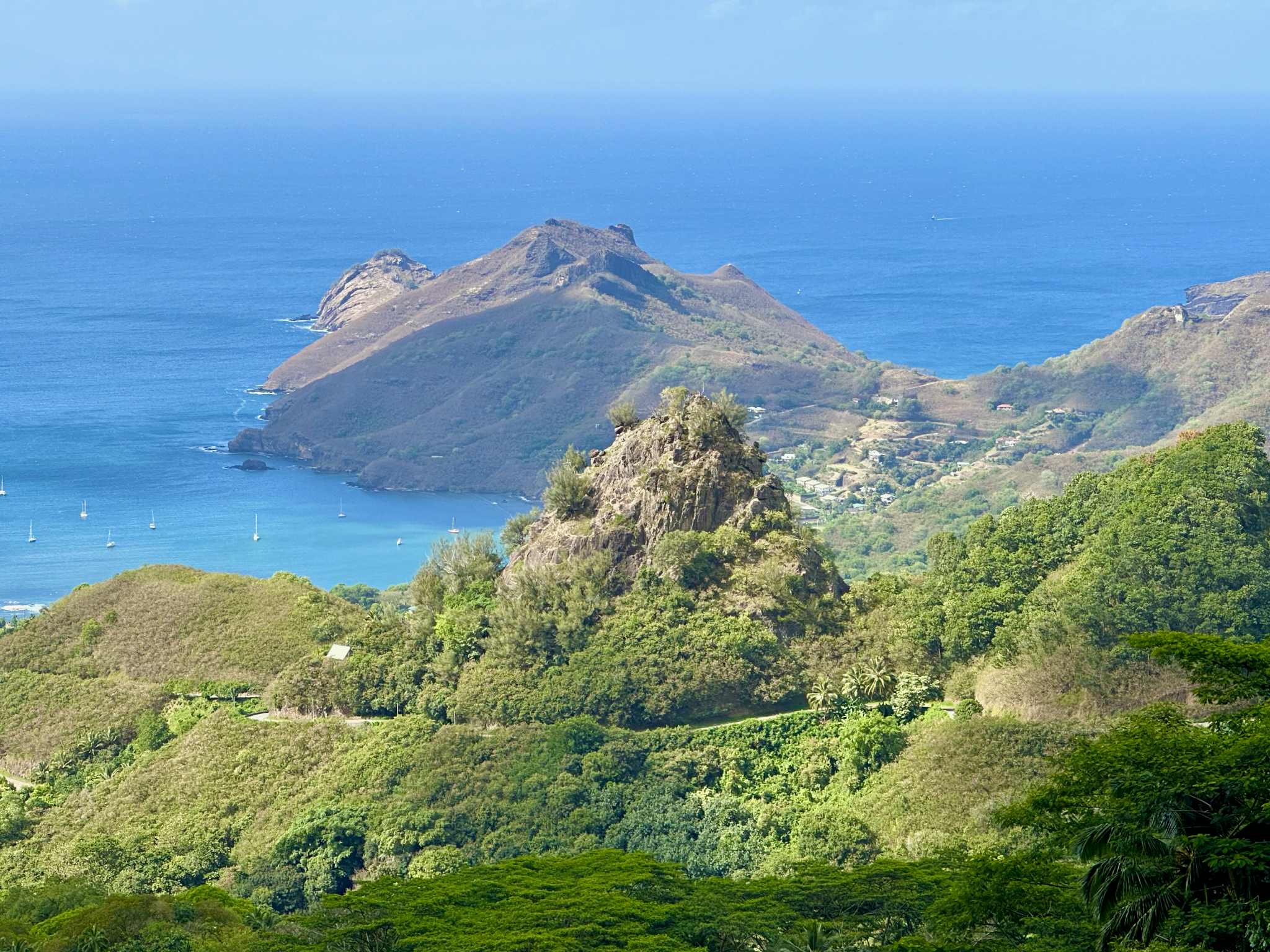
Taiohae Bay, where we anchored, is ringed by volcanic ridges that glow gold at sunrise. The town blends old and new — simple homes and roadside fruit stands beside government buildings and a modest cathedral where faith and tradition meet. Nuku Hiva carries the pulse of progress, but its heart remains deeply Marquesan: proud, spiritual, and grounded in community.
What the Islands Teach
Life in the Marquesas moves to its own rhythm – slower, simpler, and more intentional. There are few grocery stores, and shopping is limited mostly to the basics. Most homes are furnished only with a mattress or two on the floor and a few essentials. And yet, this simplicity feels like a kind of freedom.
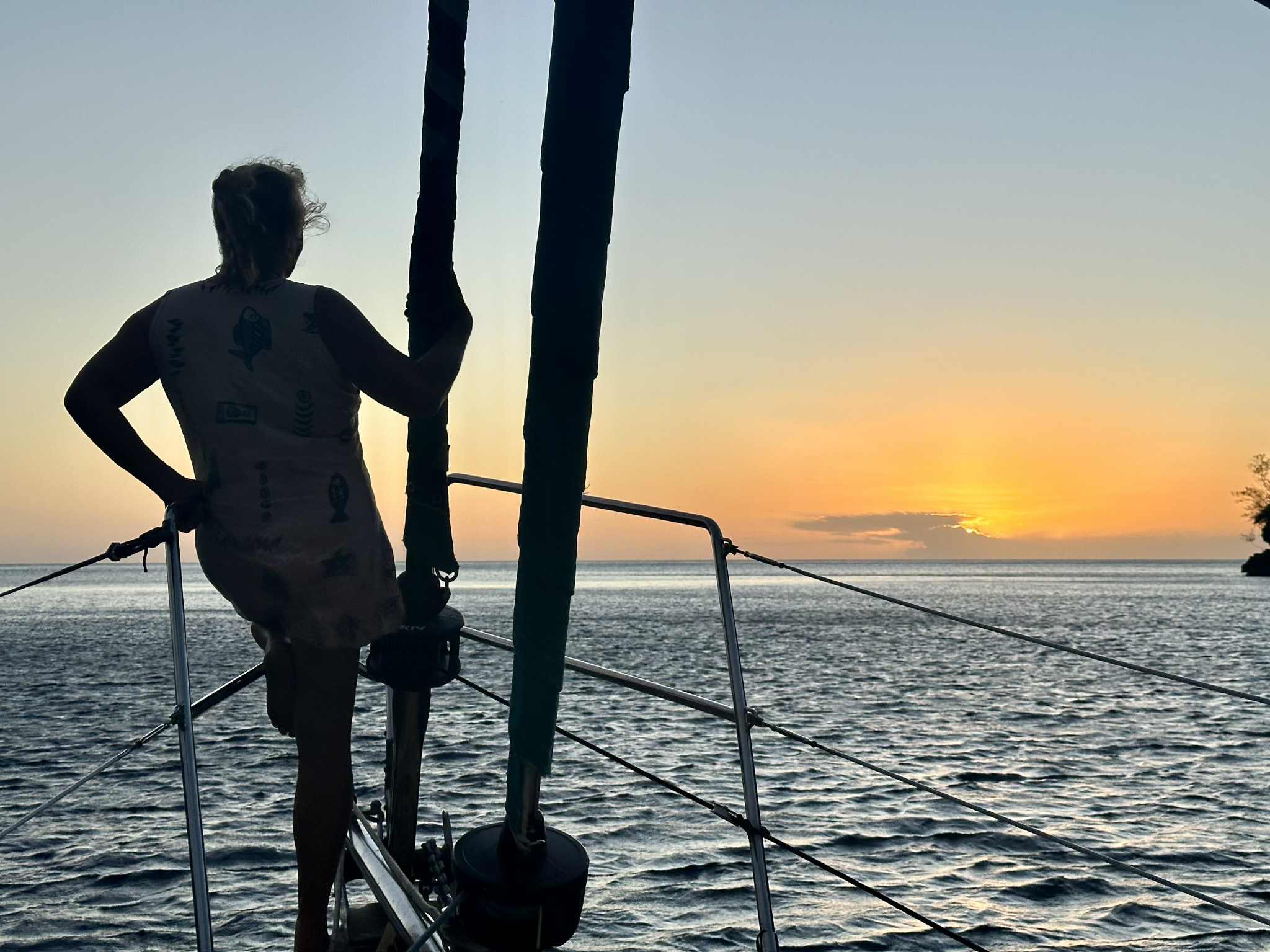
Here, value is measured not in things, but in relationships – with nature, with each other, and with the land that sustains them. Despite their isolation, the Marquesan people live fully connected lives, rich in gratitude, generosity, and grace.
One of the most fascinating aspects of Polynesian tradition we’ve encountered is the way many island cultures view gender and social roles. In earlier generations, if a family had many sons and no daughters, it was not uncommon for one boy to be raised in the role of a girl. This was never seen as strange or shameful – it was a practical and even honored choice that helped maintain balance within the family. Across Polynesia, from Tahiti to the Marquesas, these individuals were often respected for embodying both masculine and feminine strengths, serving their communities as caregivers, teachers, and mediators.
Today, this tradition continues in some parts of Polynesia in the form of a recognized third gender, known as Māhū in Tahiti or Fa’afafine in Samoa. While less common now in the Marquesas due to modernization and Christian influence, the idea endures as a reminder of how these cultures have long understood identity – not as a rigid concept, but as a reflection of harmony, purpose, and belonging within the community.
Reflections from the Sea
As we sail on from the Marquesas, these islands stay with us – not just as places we’ve visited, but as teachers. They’ve shown us that a meaningful life isn’t built on comfort or possessions, but on connection, humility, and gratitude.
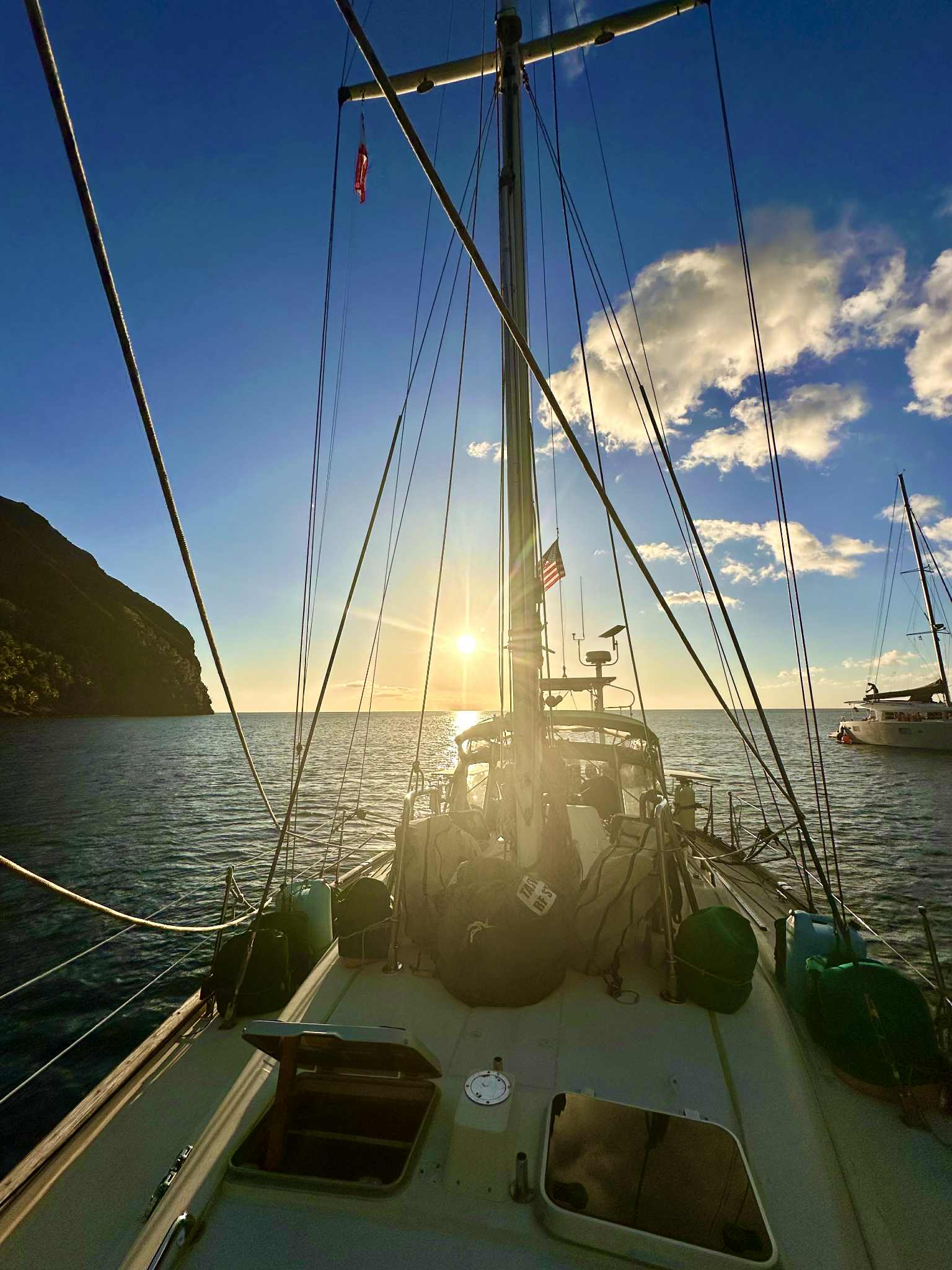
Out here, far from the noise of the modern world, we’ve come to realize that travel isn’t about distance — it’s about depth. Each island, each person, each story has added another layer to our understanding of what it means to truly live. The Marquesas remind us that faith, simplicity, and community are the truest forms of wealth — and that the greatest journeys often lead us home to ourselves.
Fair Winds,
Captain Dan and First Mate Alison
S/V Equus
Available Now in E book – Coming soon in Print
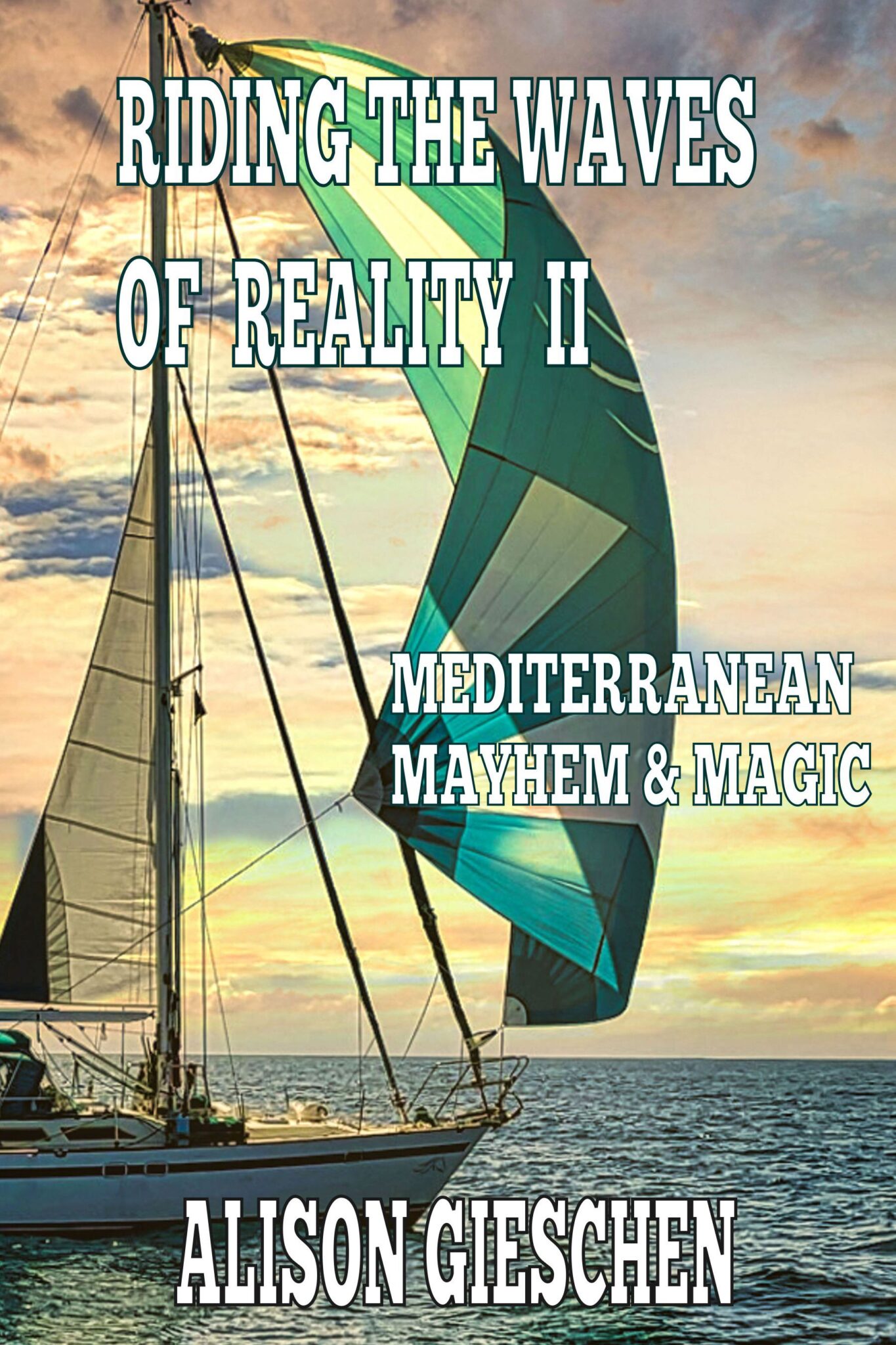
Thank you for following our journey. Check out the sequel to the first book in our sailing series: Riding the Waves of Reality, on Amazon. Riding II – Mediterranean Mayhem and Magic is filled with incredible stories and photos of our adventures in the Med and beyond!
Ebook Link