
Update: Sailing Again!
The Recap
After our engine died in the main harbor of Nuku Hiva, we returned to the United States for the holidays, believing we had finally found the solution that would get us moving again. Before leaving French Polynesia, we had ordered a new fuel injection pump and fully expected to return a few weeks later, install it, and continue on our way across the Pacific.
Instead, three weeks after arriving home, we received news that completely blindsided us. The part didn’t exist. Not only that, but there were none available anywhere in the world. The pump had become obsolete. We searched salvage yards, repair shops, used parts suppliers, and every obscure lead we could find, but nothing turned up. Not a single replacement could be located anywhere.
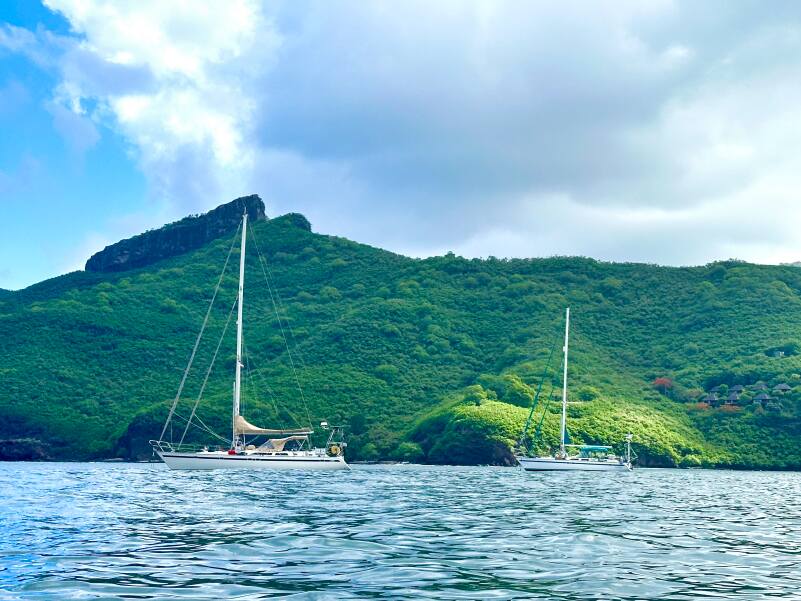
Two months later, we returned to our boat in Nuku Hiva and shifted to Plan B. Dan removed the injection pump and shipped it to Tahiti in hopes that a repair shop could rebuild it. Then we waited. Three long months passed before the part finally arrived back on our remote island. With cautious optimism, we reinstalled it, crossed our fingers, and attempted to start the engine.
Nothing happened. The repair had failed.
At that point, Dan pulled the pump back out yet again and ordered individual components so he could attempt his own repairs. Another month crawled by while we waited for parts to arrive in one of the most remote places in the world. Finally, after seven months trapped in the harbor, the rebuilt pump was ready to try one more time. This time, the engine started.
More Mechanical Mayhem
The relief and excitement we felt in that moment are difficult to describe. We had spent months stuck in limbo, watching weather windows pass by, watching friends come and go, and wondering if we would ever get moving again. Suddenly, we could finally begin thinking about the adventures ahead instead of the mechanical disasters behind us.
As we prepared to leave for the remote atolls of French Polynesia, we began getting our dive gear ready. One of the things we were most excited about was diving again in some of the clearest and most pristine waters on Earth. We hauled out the scuba tanks, fired up the compressor, and immediately ran into yet another problem when the dive compressor refused to start.
Thankfully, Dan managed to troubleshoot and repair it, and we filled two tanks, which takes nearly two hours, before deciding that was enough progress for one day. The following morning, we powered everything back up. Running the dive compressor requires our generator, so Dan started the generator, engaged the compressor, and almost instantly, the generator shut down.
That was not a small problem because our generator is essential when we don’t have enough sunlight to keep our lithium batteries charged. It powers the systems that keep our refrigerator, freezer, electronics, and fans running, and without it, life aboard becomes very difficult very quickly.
After more troubleshooting, Dan discovered that not one but two capacitors had failed. Unfortunately, we only carried one spare onboard.
Finally Leaving the Harbor
At that point, however, we had simply reached our limit. We refused to let another setback stop us from leaving the harbor where we had been trapped for seven months. With equal parts excitement and anxiety, we raised anchor and pointed ourselves back toward open water.
We felt shell-shocked and a little snake-bit, honestly, waiting for the next thing to go wrong. Every unfamiliar sound made us tense, and every vibration had us wondering if another failure was moments away. But the engine kept running smoothly as we raised the sails and set off on a short shakedown cruise to Daniel’s Bay on the same island, wanting to test everything before committing to longer offshore passages.
On a thirty-year-old sailboat, the reality is that something is always waiting to fail. It is never a question of if, only when. We carry a substantial inventory of spare parts, but after months of breakdowns, many of those supplies had already been depleted, and replacements are not exactly easy to source in remote places like French Polynesia. Fortunately, the trip was a success.
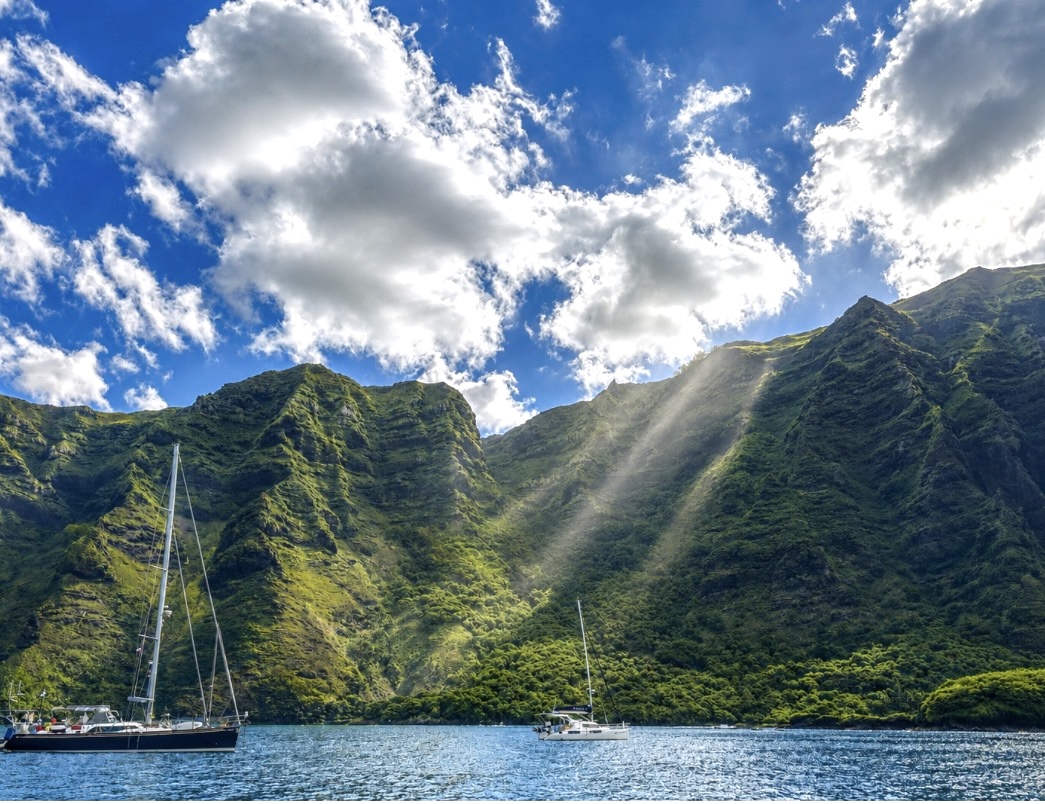
Daniel’s Bay was stunning beyond words, with towering green mountains surrounding the harbor and steep cliffs draped in dense jungle disappearing into low clouds. The scenery looked like something pulled directly from The Lord of the Rings. After months spent stuck in the same harbor staring at the same shoreline, simply moving again felt exhilarating.
Setting Sail for Raroia
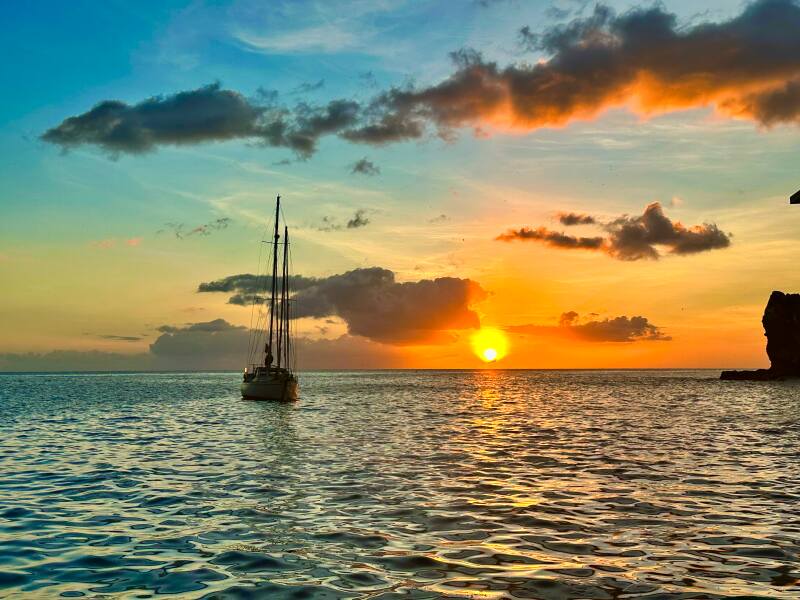
A few days later, we departed for Ua Pou. We had visited the island before, but this time we sailed to a different harbor that would serve as our launching point for a three-night offshore passage to our first atoll, Raroia.
We only stayed in the quiet harbor for two nights to catch our breath before our several-day passage.
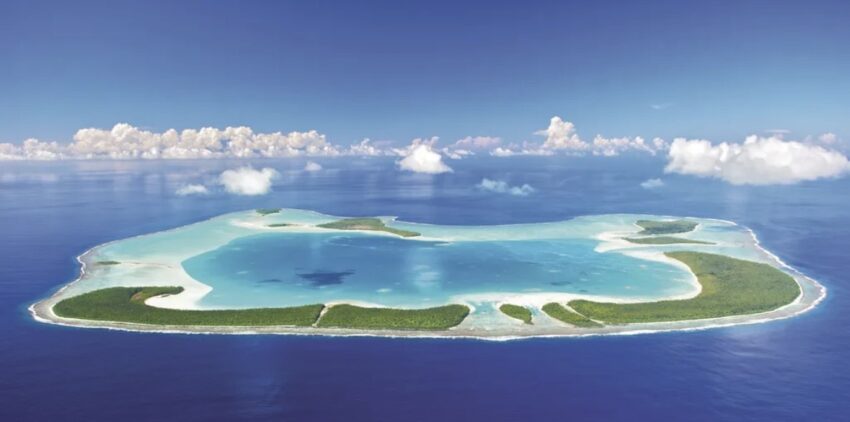
Raroia carries a fascinating history because it is the atoll where Thor Heyerdahl and the Kon-Tiki expedition famously crash-landed in 1947 after crossing the Pacific Ocean aboard a handmade balsa wood raft. Heyerdahl set out to prove that ancient South Americans could have reached Polynesia using primitive vessels and ocean currents alone. After more than one hundred days adrift at sea and over 4,000 nautical miles traveled, the Kon-Tiki struck the reef at Raroia, cementing the atoll’s place in maritime history.
The atolls themselves are unlike anywhere else we have ever sailed. From a distance, they barely seem real. These massive rings of coral and sand sit low against the horizon with little more than rows of palm trees visible above the waterline. Inside the rings are enormous lagoons filled with crystal-clear turquoise water and thriving sea life.
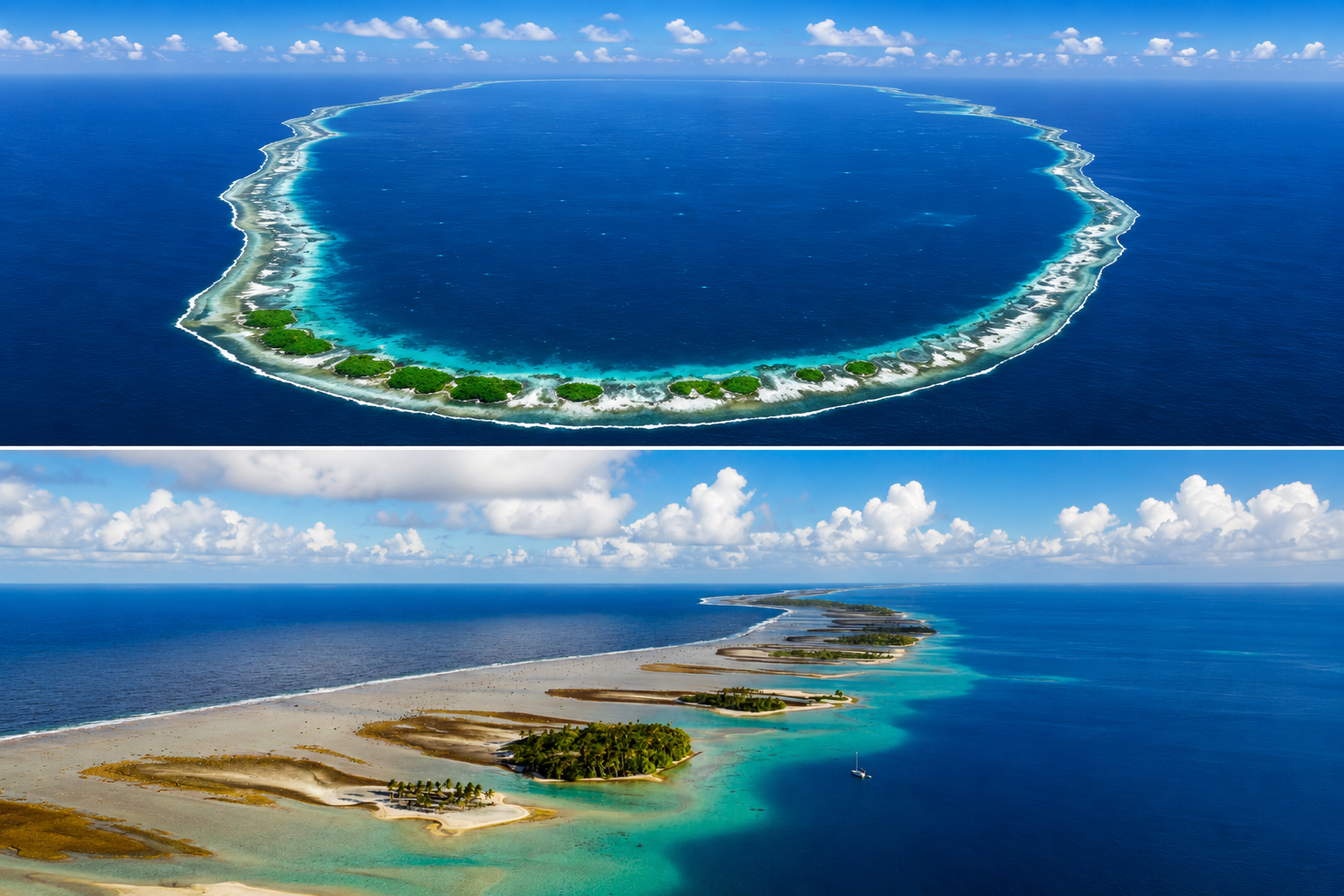
The geography is extraordinary because ancient volcanic islands once occupied these locations millions of years ago. Over time, coral reefs formed around the volcanoes while the volcanic mountains themselves slowly sank beneath the ocean. What remains today are giant circular reef systems surrounding shallow inland seas. Scattered throughout the lagoons are bommies, coral heads that rise dramatically from the seafloor like underwater towers.
While beautiful, bommies also create serious navigational hazards because striking coral can severely damage a boat. Sailing through the lagoons requires constant vigilance and careful navigation.
Entering the Atoll
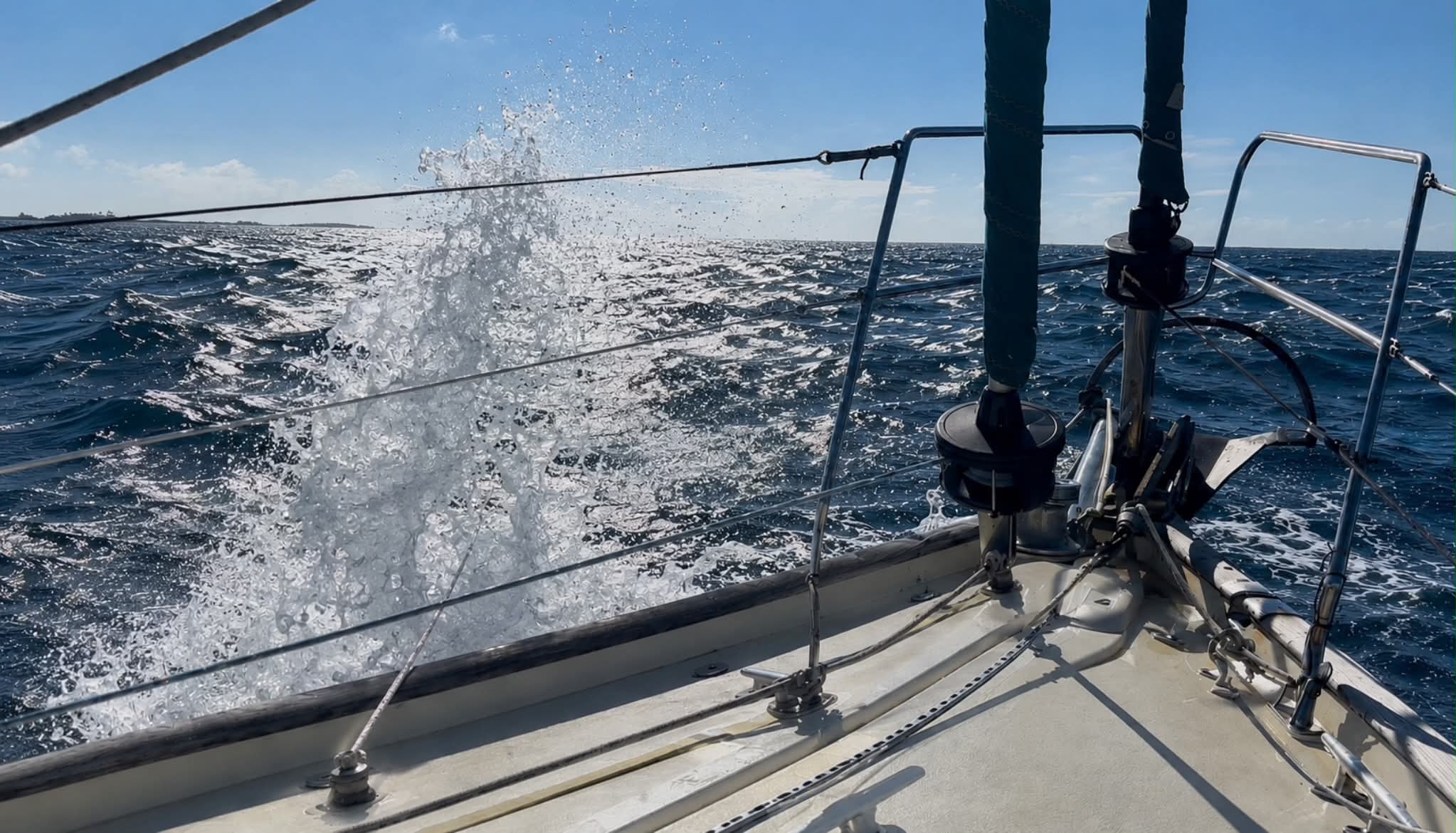
Entering the atolls presents another challenge altogether. Most atolls have only one navigable pass through the reef, and these narrow openings funnel enormous volumes of tidal water in and out of the lagoon, creating powerful currents, standing waves, whirlpools, and turbulent water. Timing your entrance correctly is critical because entering at the wrong stage of the tide can quickly become dangerous.
We arrived at Raroia just after sunrise on our fourth day at sea, and seeing the atoll appear on the horizon brought an enormous sense of accomplishment. It had been nearly a year since we had completed a true multi-night offshore passage, and I had forgotten how physically demanding the adjustment can be. Preparing food while the boat pitches and rolls takes practice, and the three-hour-on, three-hour-off night watch schedule leaves you perpetually exhausted.
Still, we were thrilled to have completed our first passage after almost a year, arriving at one of my most anticipated destinations on our circumnavigation.
Entering the pass into Raroia was stressful since we were completely new to the process, but Dan handled it calmly and skillfully. Once inside, the water transformed into impossible shades of blue and turquoise that hardly looked real. We got past the rough entrance and navigated around the bommies to the nearest anchorage just a short distance away. We wanted to get the anchor down ASAP, take a deep breath, and get a good night’s sleep.
Life on Raroia
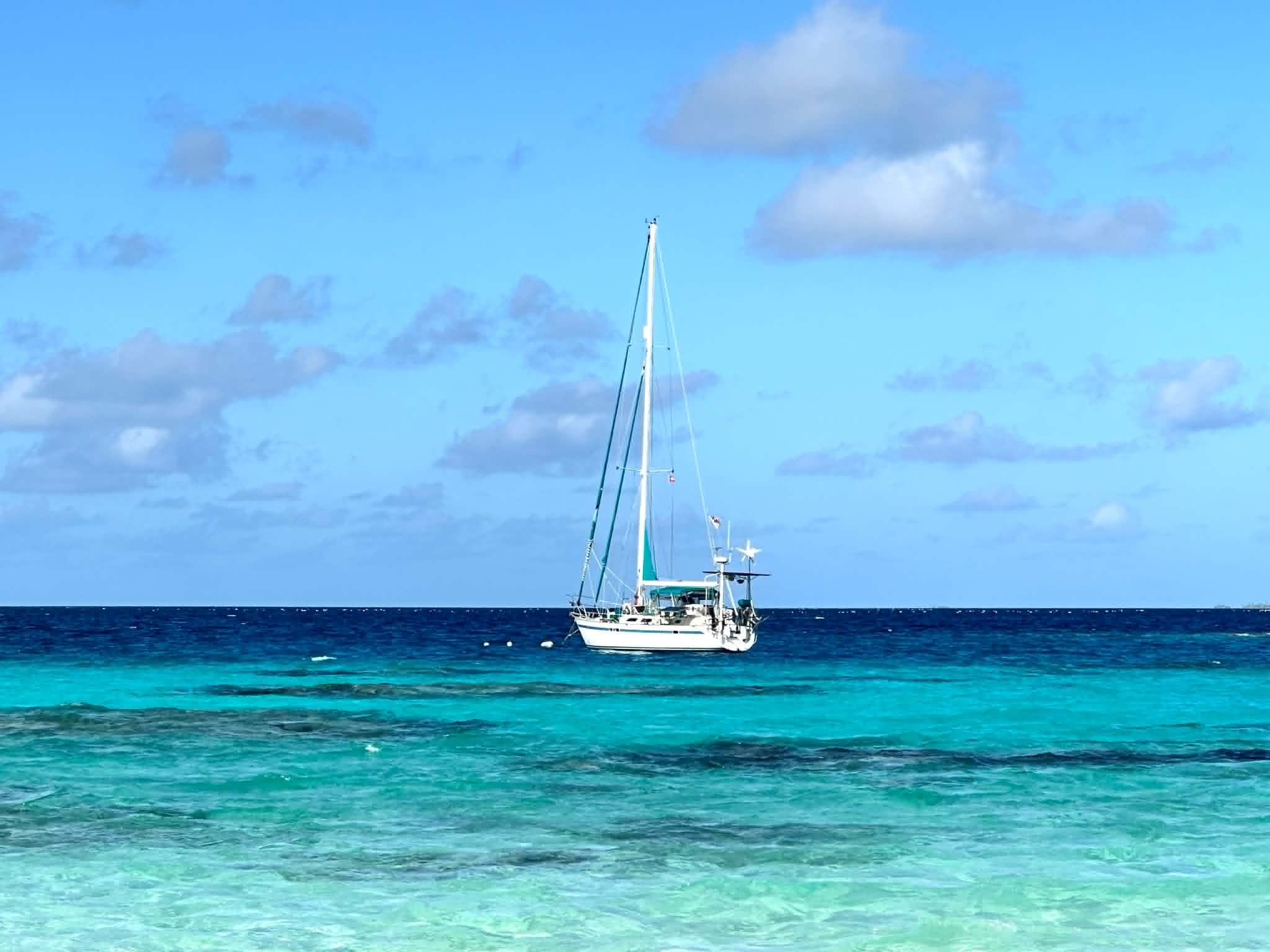
We spent our first night anchored near the tiny village located close to the pass. Calling it a town feels generous because there is a small airstrip, one tiny grocery store with very sparse inventory, a church, and roughly twenty-five families living there.
If you want a meal, you speak with the woman who runs the grocery store, and she cooks for you inside her home. Life there feels beautifully simple and completely disconnected from the modern world.
After one very long, peaceful night, we were well rested, so we motored across the lagoon toward another anchorage where our sailing app showed fourteen other boats gathered together. The crossing took roughly two hours, and when we arrived, we found sailboats anchored in a gentle arc along a dazzling white sand beach. I spent the entire two-hour crossing up on the bow looking for bomies. Dan had some satellite imagery to help locate them, but at least I felt like I was doing something productive, while I danced around and sang, watching the views from the bow in a state of euphoria.
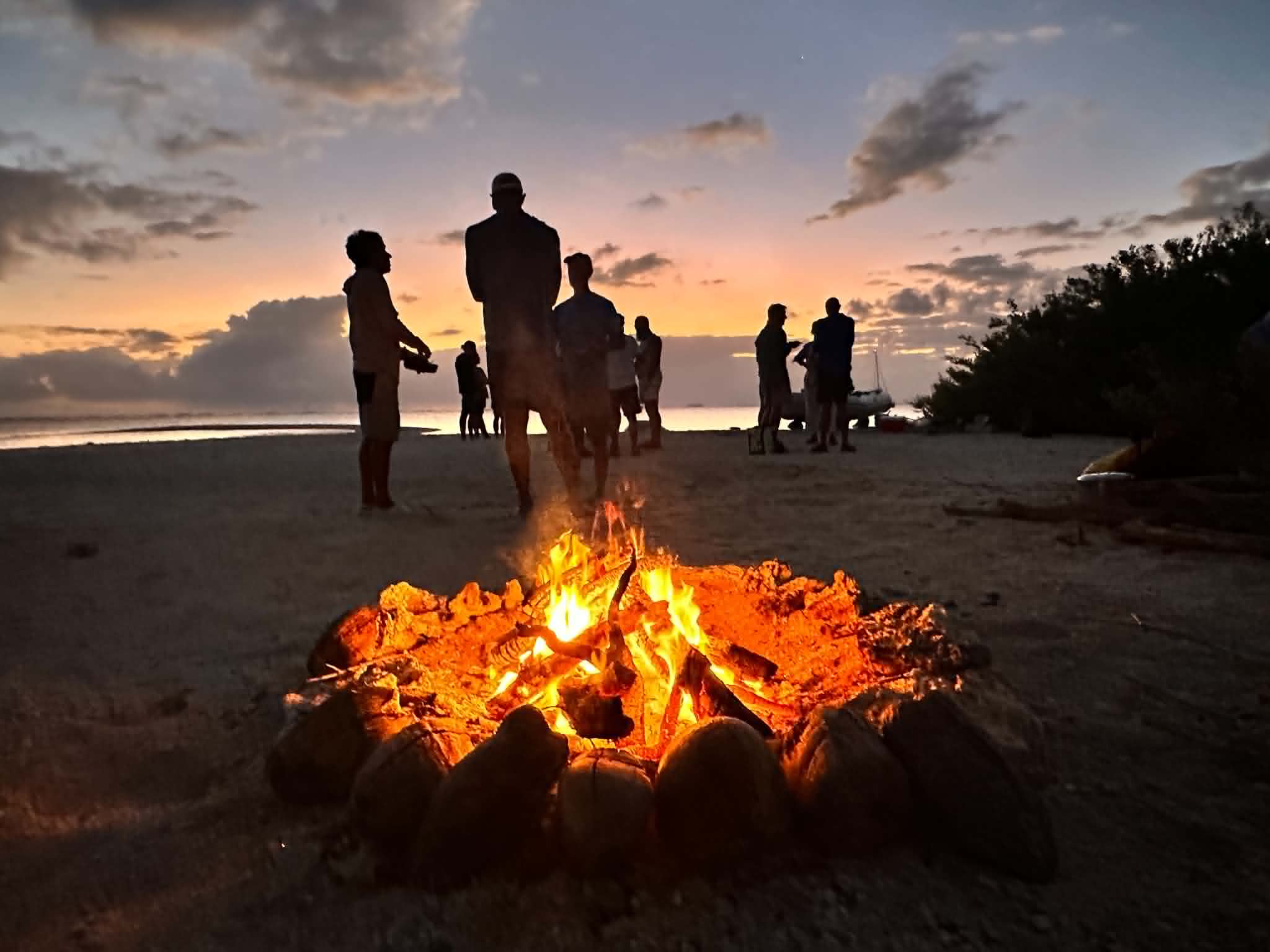
Not long after dodging bommies and dropping anchor, we were invited to a beach bonfire that evening. We climbed into our dinghy and followed friends ashore, where a small gathering of cruisers had already assembled around a crackling fire. Dinghies lined the edge of the beach while music drifted through the warm evening air. Food appeared from every direction, conversations became animated, and stories flowed effortlessly among people who all understood this strange and beautiful lifestyle, even though we gathered from different countries around the world.
Back to the Life We Love
As the evening progressed, the sunset exploded into layers of orange, crimson, purple, and deep blue, stretching across the lagoon. I remember looking around and genuinely having trouble believing we were finally there.
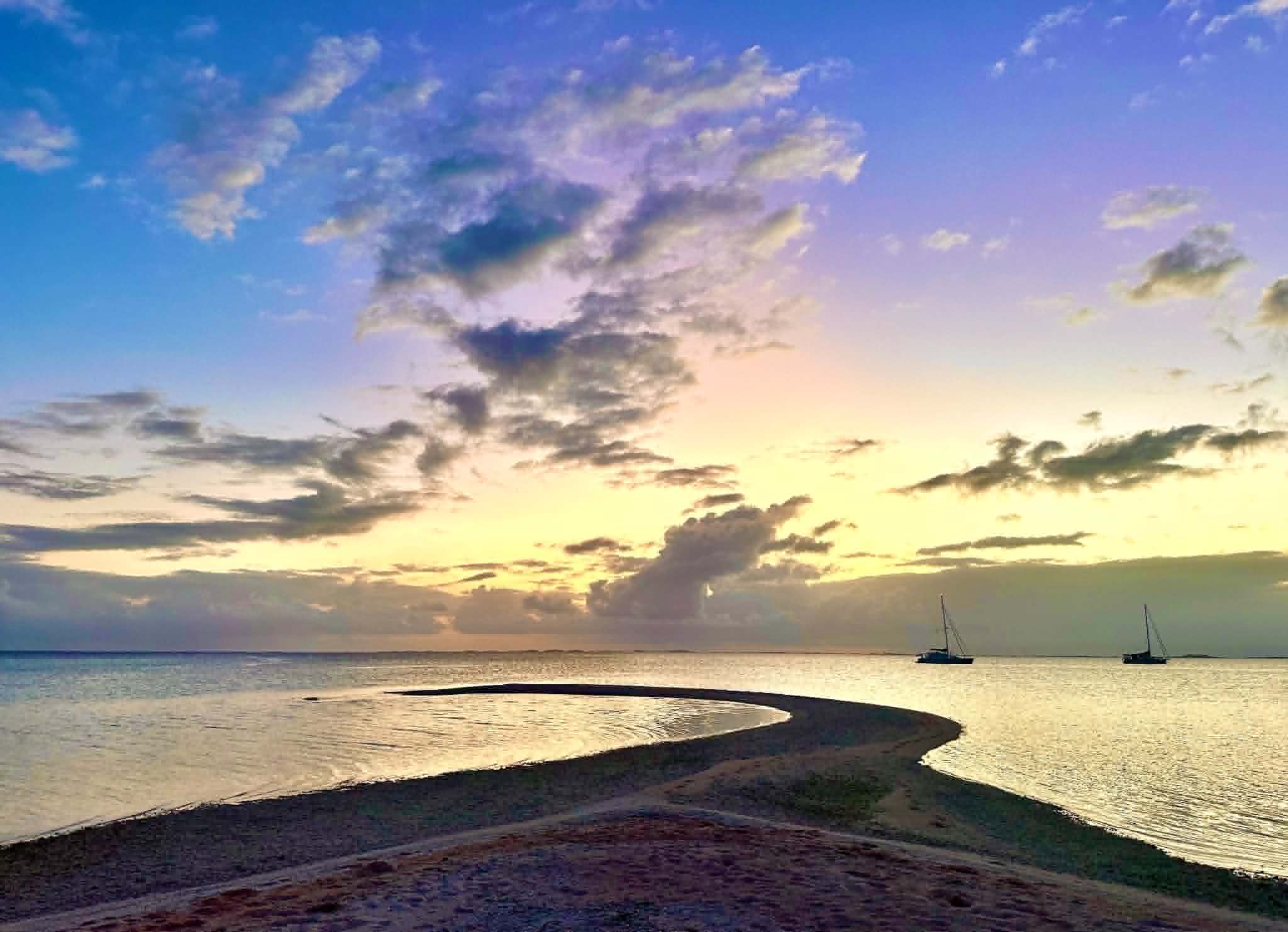
For months, we had lived in isolation while friends continued sailing onward without us. We had spent day after day troubleshooting failures, ordering impossible-to-find parts, and wondering whether our season in French Polynesia had effectively ended before it ever truly began.
Now, suddenly, we were back. Back to meeting new people. Back to making new friends. Back to finally enjoying our lives again. The views surrounding us were some of the most incredible I have seen in a very long time.
Then, as happens often in our lives, probably more than we deserve, divine intervention gave us the final boost we needed. Our new friend Lou from S/V World Wind, a solo sailor whose boat we had seen in a couple of harbors but had never actually met, made us an unbelievable offer.
As we shared stories about how difficult it is to get boat parts in remote places like this, we explained that we needed capacitors to get our generator fully working again. Without them, we could not properly fill our scuba tanks or fully power the boat.
Lou explained that a friend of his would be flying into the next island down, Fakarava, in ten days, carrying boat parts for several cruisers. If we sent our order to her, she would pack the capacitors in her suitcase, and we could pick them up when she arrived. Not only that, but Lou also had a dive compressor onboard and offered to fill our tanks for us.
The two missing pieces we needed to become one hundred percent operational again were delivered during a quiet conversation on one of the most beautiful beaches we have ever seen, surrounded by people who share this incredible lifestyle.
Does it get any more perfect? I don’t think so.
What Comes Next?
Hopefully, we will get into a steady pattern of traveling a day or so between the various atolls. Our next stop will be Makemo. The difficult part of going to the next island is that it is 72 miles away. Once again, we are constrained by when we can enter and exit each atoll. An overnight sail leaving in the afternoon puts us in too early to enter Makemo, and we would have to wait hours. The early morning exit from here will put us there in the middle of the night. We will have to figure out which is better, but there will be heaving to somewhere on the journey.
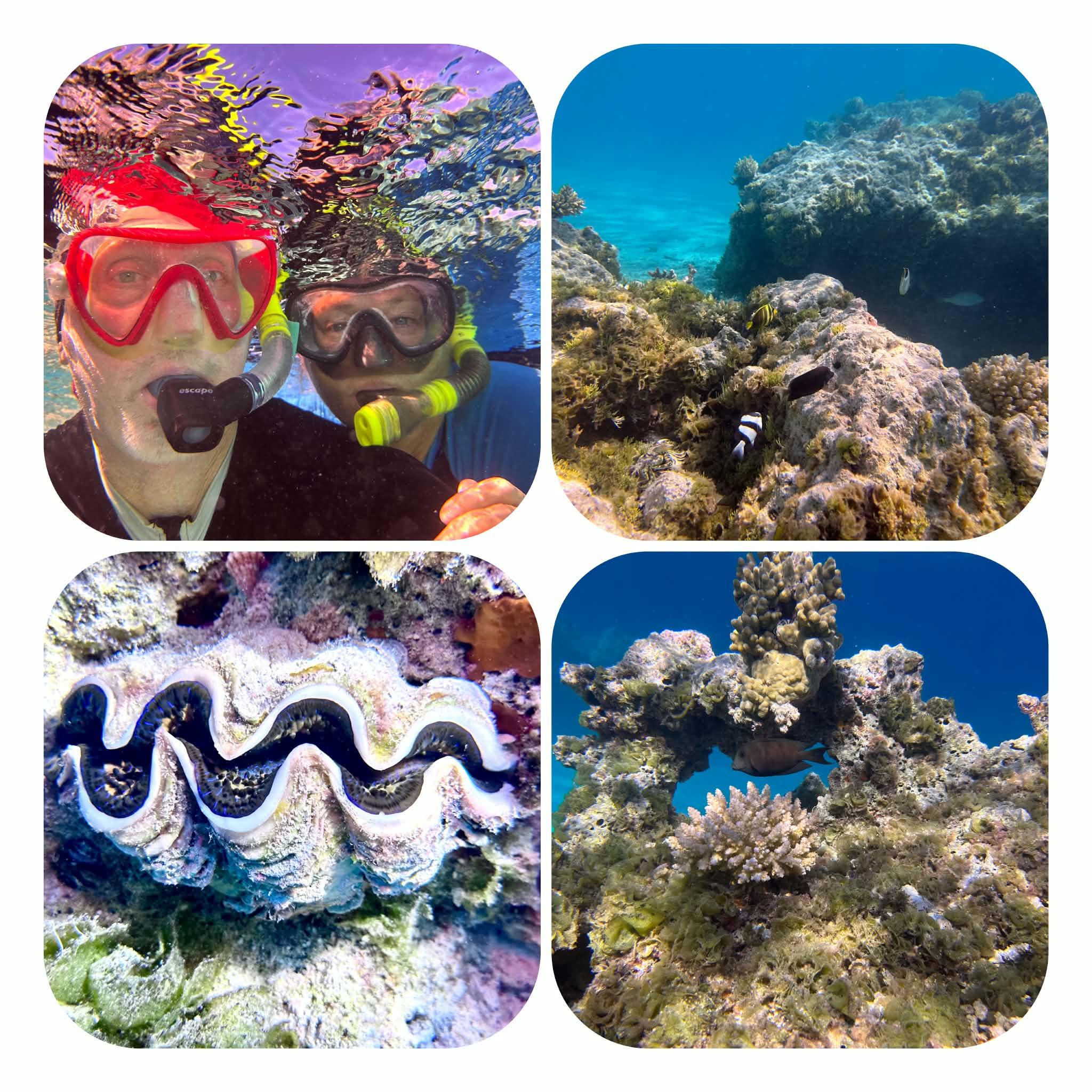
Meanwhile, as we mull all this over, we have some exploring to do of this side of the atoll, and of course, there is the snorkeling!
We had a blast at our first bommie snorkel. I even got a good video of a black-tip shark that was hanging around. Check out my Facebook or Instagram accounts to see my videos. (Facebook: Sailmates, Instagram: Sailing Equus).
May you enjoy this journey along with us, and may you have smooth seas, fair winds, and wonderful adventures of your own. This is a beautiful planet with many amazing things to do and see.
Fair winds,
Captain Dan and First Mate Alison
S/V Equus
If you haven’t read our books about our sailing adventures, visit my Nautical Novelist website and read the first two books of Riding the Waves of Reality! Book three is coming out soon.
www.alisongieschen.com