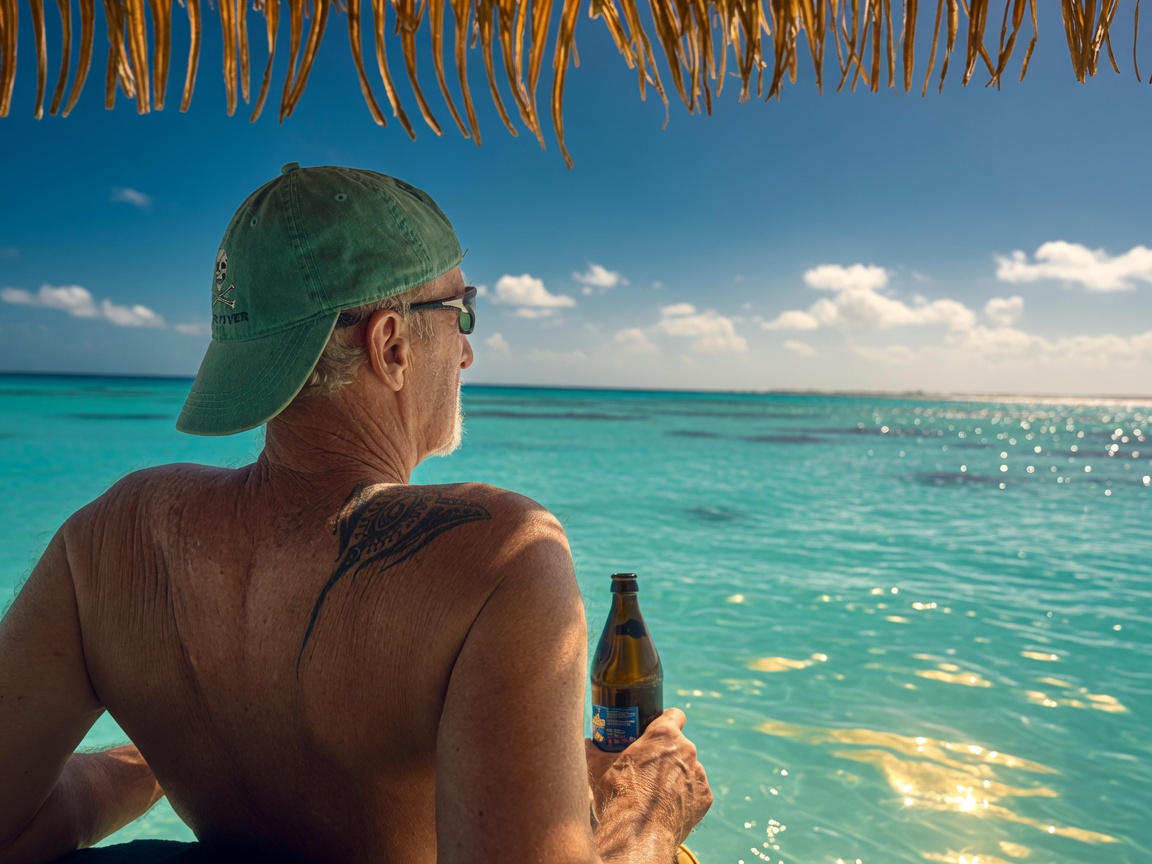
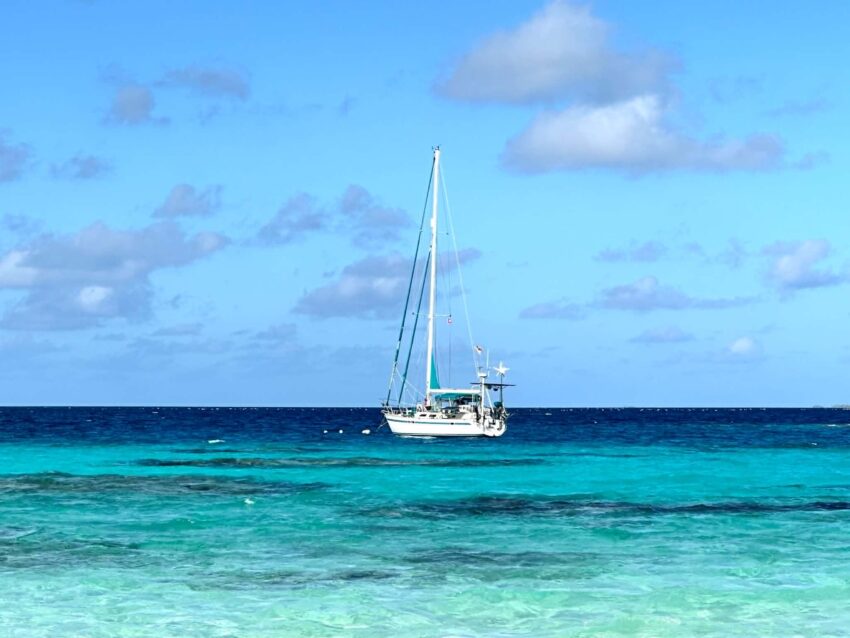
There is something magical about arriving at a Tuamotu atoll.
For years I had stared at photographs and read stories about these tiny rings of land scattered across the South Pacific. They seemed almost mythical remote, untouched, and impossibly beautiful. Now, after visiting Raroia, Makemo, Fakarava, Toau, and Rangiroa, with Tikehau next on our itinerary before we head to the Society Islands, I can honestly say they are everything we imagined…and more.
Rings of Paradise
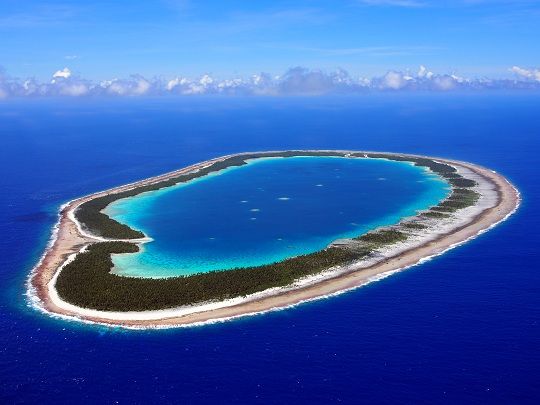
Unlike the volcanic islands of French Polynesia, the Tuamotus are coral atolls.
Millions of years ago, volcanic islands slowly sank beneath the sea. As they disappeared, the coral reefs that had formed around them continued to grow upward toward the sunlight. Eventually, only a ring of coral remained, surrounding a calm lagoon where the mountain once stood. Today these rings are lined with white sand, endless coconut palms, and some of the clearest water on Earth.
Looking at one from above, they resemble giant emerald necklaces floating in a sea of deep sapphire blue.
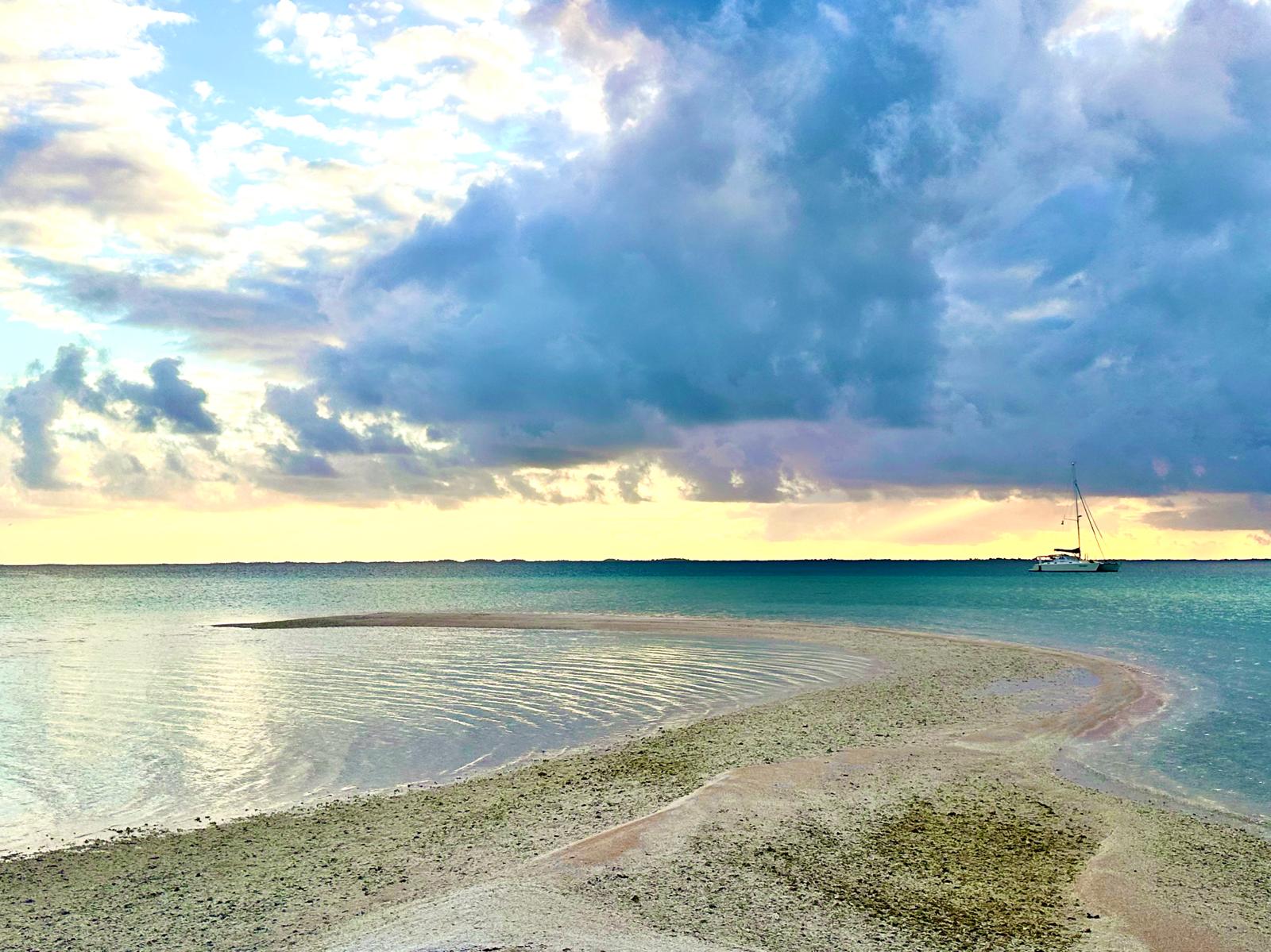
Inside the ring lies tranquil turquoise water. Outside is the vast Pacific Ocean. Connecting the two are narrow openings called cuts or passes.
These cuts are both the gateway and the greatest challenge.
Timing Is Everything
Every arrival and departure requires careful planning.
As the tides rise and fall, millions of gallons of water move between the peaceful lagoon and the open ocean. All of that water is forced through these narrow cuts, creating currents that can resemble a fast-moving river.
At peak tidal flow, the current can become astonishingly powerful. Standing waves form. Huge whirlpools appear. Depending on the wind and ocean swell, the entrance can become a washing machine of breaking seas and ripping currents.
We always try to arrive or depart as close to slack tide as possible—the brief period when the tide changes direction and the current eases.
Sometimes, however, nature doesn’t cooperate.
Around the full moon, the tidal pull can become so strong that there is little or no true slack water. The current simply roars in one direction (outbound) until the moon’s pull finally relents. Wind driven waves also cause the lagoons to “over-fill” adding to the volume exiting on an ebb tide.
Every passage through a cut demands respect.
Life at the Edge of the World
The farther you travel into the Tuamotus, the more you realize just how isolated these islands are.
Some atolls have only one or two families living there. Others have a tiny village, which usually means there’s a small grocery store.
“Grocery store” is a relative term.
Fresh fruits and vegetables are almost nonexistent. Shelves are stocked mostly with canned goods and frozen foods. Commerce simply hasn’t reached many of these remote places.
The larger, more populated atolls may have an airstrip or a dock for supply vessels. Their grocery stores are bigger, but fresh produce is still scarce and often sells out the same day it arrives.
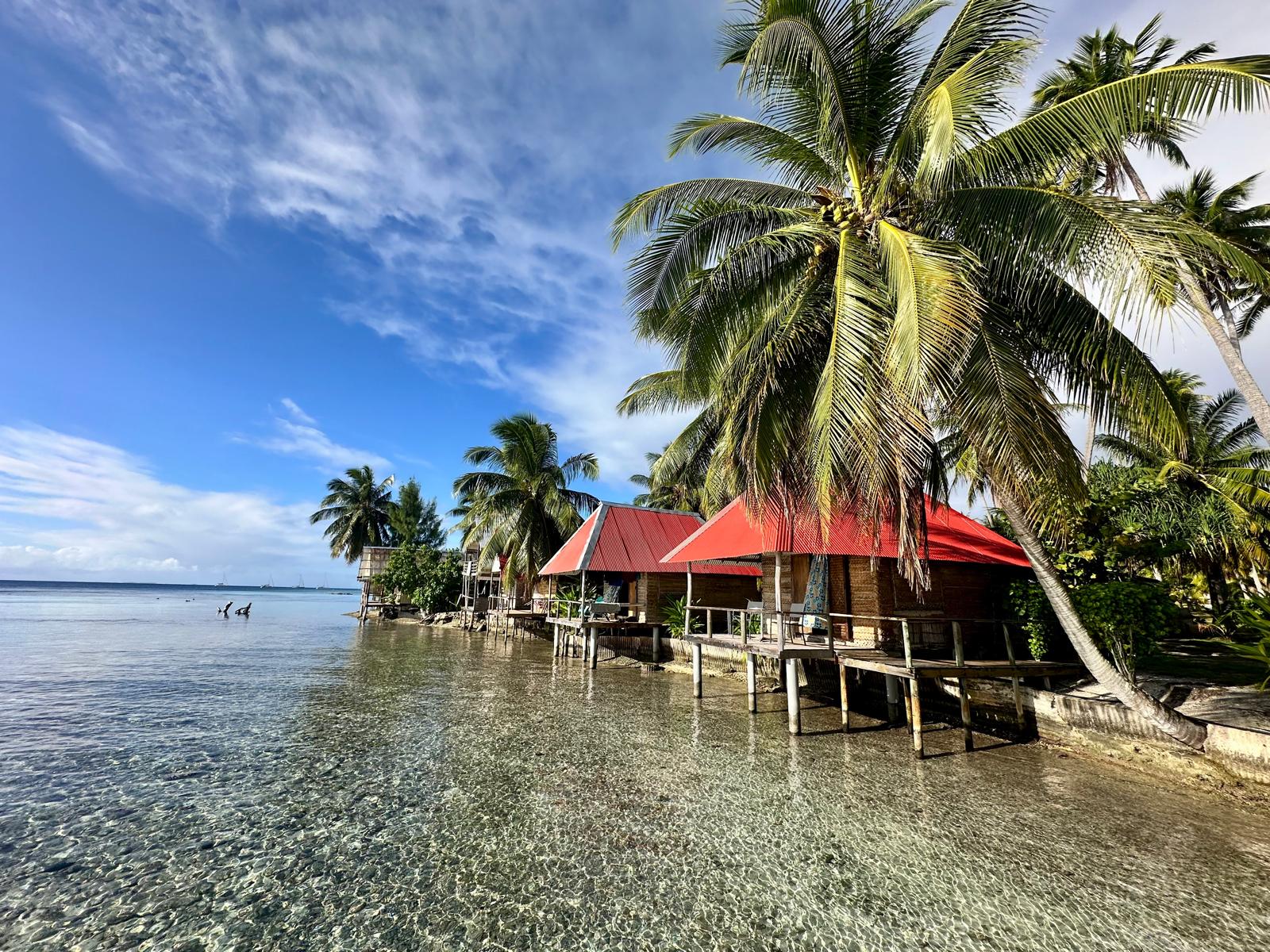
In some remote atolls, supply deliveries are several months apart. You quickly learn to buy what you can when you see it.
The Warmest Welcome
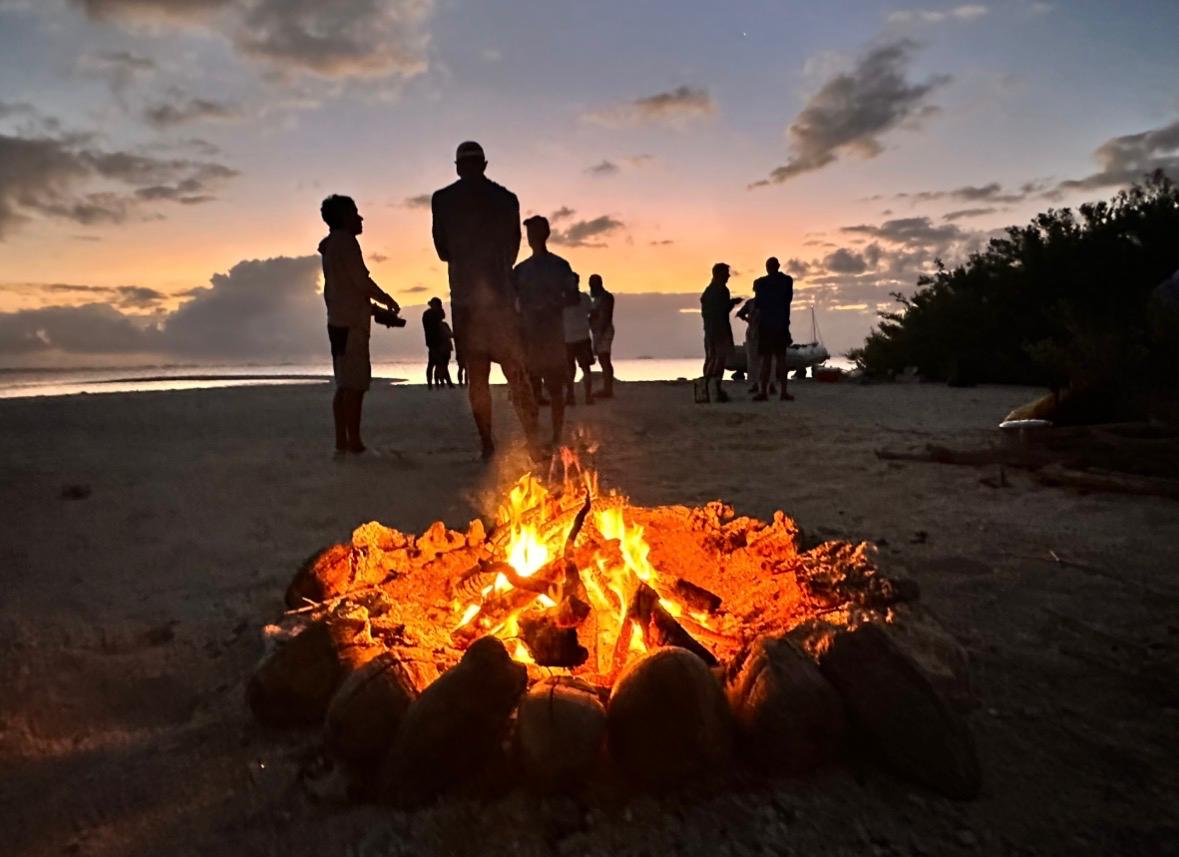
What every atoll does have is incredibly kind people.
Most speak little or no English, so I’ve been working hard on my French. I’ve reached the point where I can ask questions, understand most of the answers, and find my way around, even if I’m far from conversational.
It has made all the difference.
Whether we’re looking for a market, asking about fuel, or trying to find a pearl farm, the locals are patient, welcoming, and always willing to help.
Their warmth makes these isolated islands feel surprisingly inviting.
Simple Food Done Exceptionally Well
Restaurants are rare.
Sometimes the “restaurant” is simply a family’s front porch with a handwritten menu.
The choices are usually simple—fresh fish, rice, and perhaps a few vegetables.
That’s it.
Yet every meal seems unforgettable.
When those are the ingredients you’ve cooked with your entire life, you learn to prepare them perfectly. The fish is incredibly fresh, the rice is flavorful, and even the simplest meal becomes something special. And the portion sizes? Way too much for for two normal people to eat. Although I have to say, the men here are huge. Perhaps they prepare all meals for a Polynesian man’s appetite. We have not had one that was not utterly delicious and completely satisfying. However, the cost of food here is a bit of sticker shock. Due to the scarcity and distance anything imported must travel, the food reflects that cost. A bag of potato chips may cost you sixteen dollars, eggs, up to twelve dollars a dozen, and a bottle of Italian Seasoning, at least eight. A jar of mixed nuts will be in the twenties.
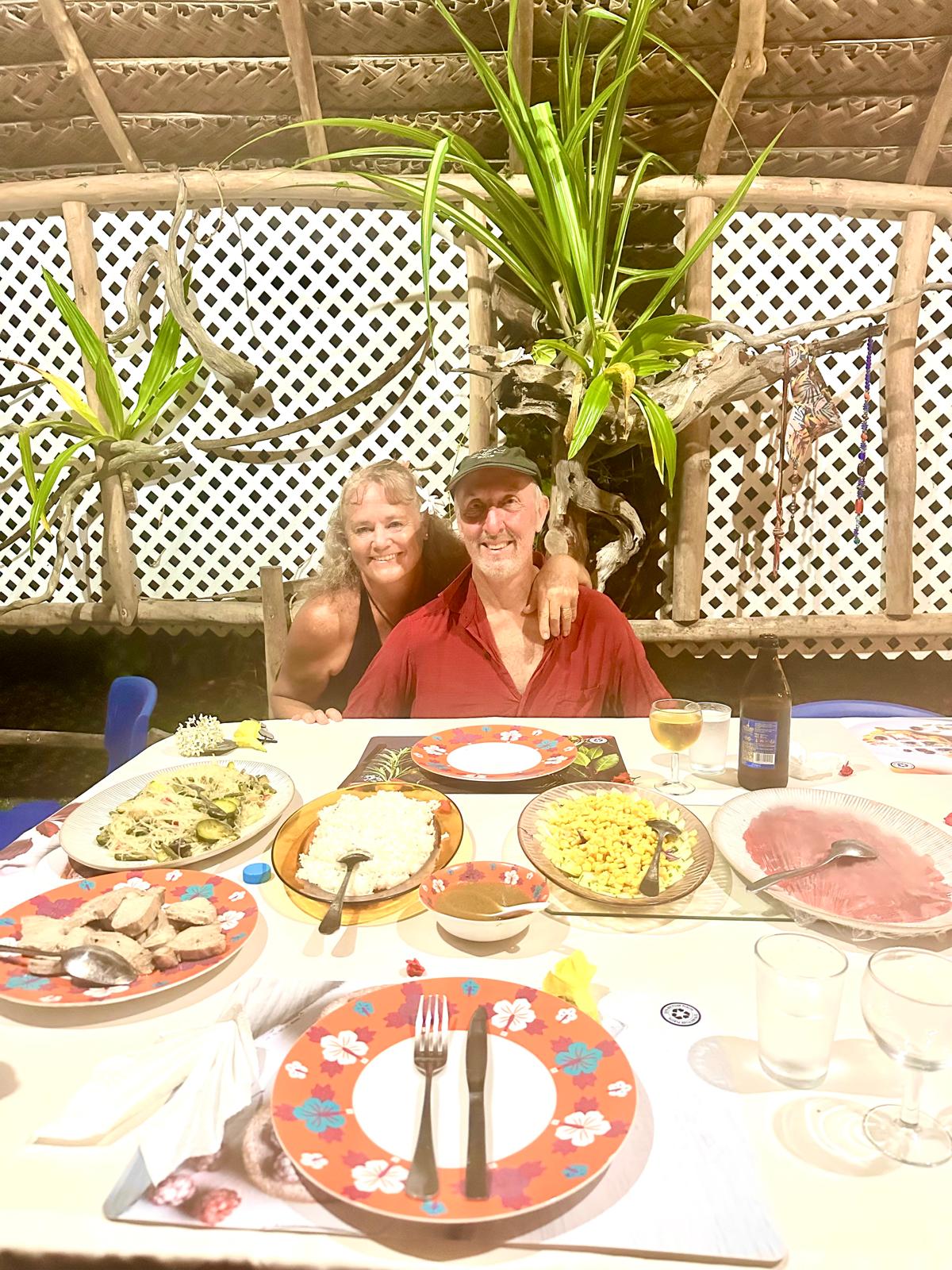
I won’t get into the price of alcohol. Too depressing. Needless to say, happy hour is very limited and each drink is a special occasion rather than just habit.
As a result, our meals are fewer, and our portions smaller. However, both of us have lost weight which always makes you feel good!
The French Polynesian Spirit
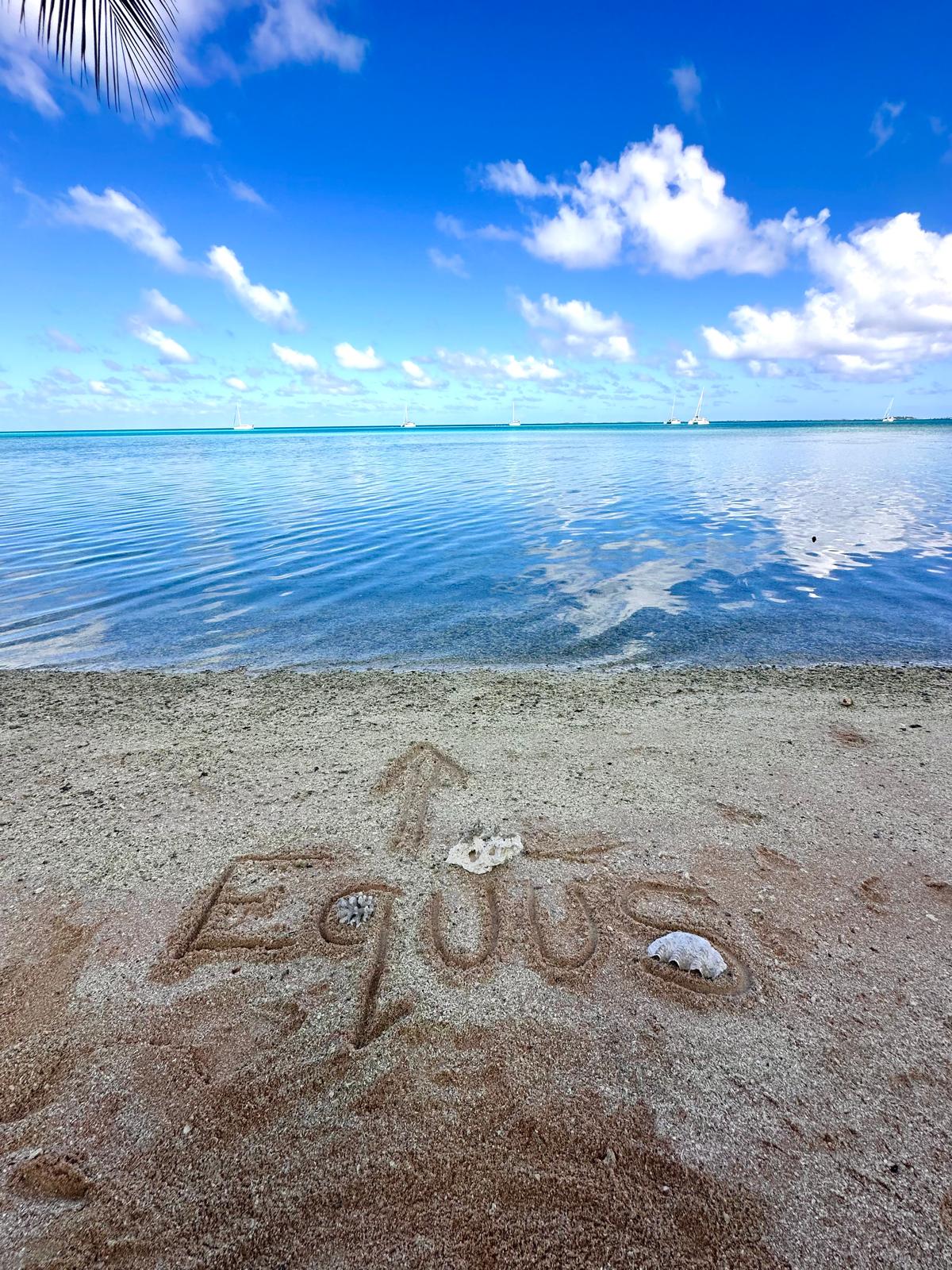
he Polynesian culture is wonderfully alive throughout the Tuamotus.
Village festivals fill the air with the sound of traditional drums while women dance gracefully in colorful pareos and grass skirts. Homes and huts are decorated with beautifully woven coconut fronds, and vibrant tropical flowers line the sandy roads.
Life moves at a slower pace here.
There are no traffic jams.
No shopping malls.
No rush.
Just bicycles, small scooters, children playing, and neighbors stopping to chat beneath the palms.
The Black Pearl Farms
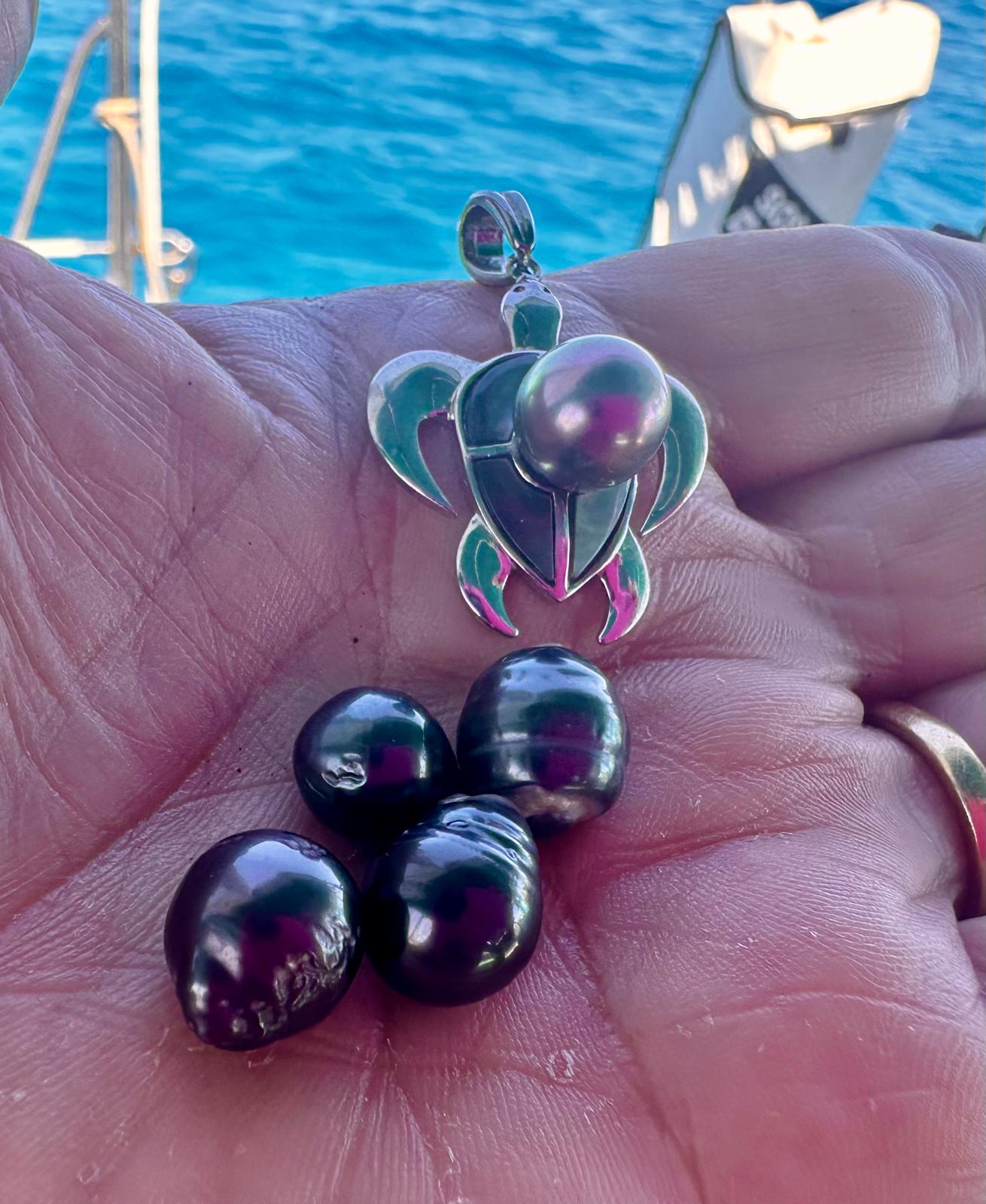
Many of these atolls are famous for another treasure—the black cultured pearl.
Pearl farming is one of the primary sources of income for many families. The process is fascinating.
Pearl oysters are carefully raised in the protected lagoons. Skilled technicians gently open each oyster and surgically implant a tiny round bead along with a small piece of mantle tissue from another oyster. The oyster is then returned to the lagoon, where it slowly coats the bead with layers of lustrous nacre.
Over the next year or two, nature does the rest.
When the pearls are harvested, no two are exactly alike. Their colors range from silver and green to deep peacock and jet black, creating some of the most beautiful jewelry in the world.
It’s easy to understand why French Polynesian black pearls are so highly prized.
Entering Another Underwater World
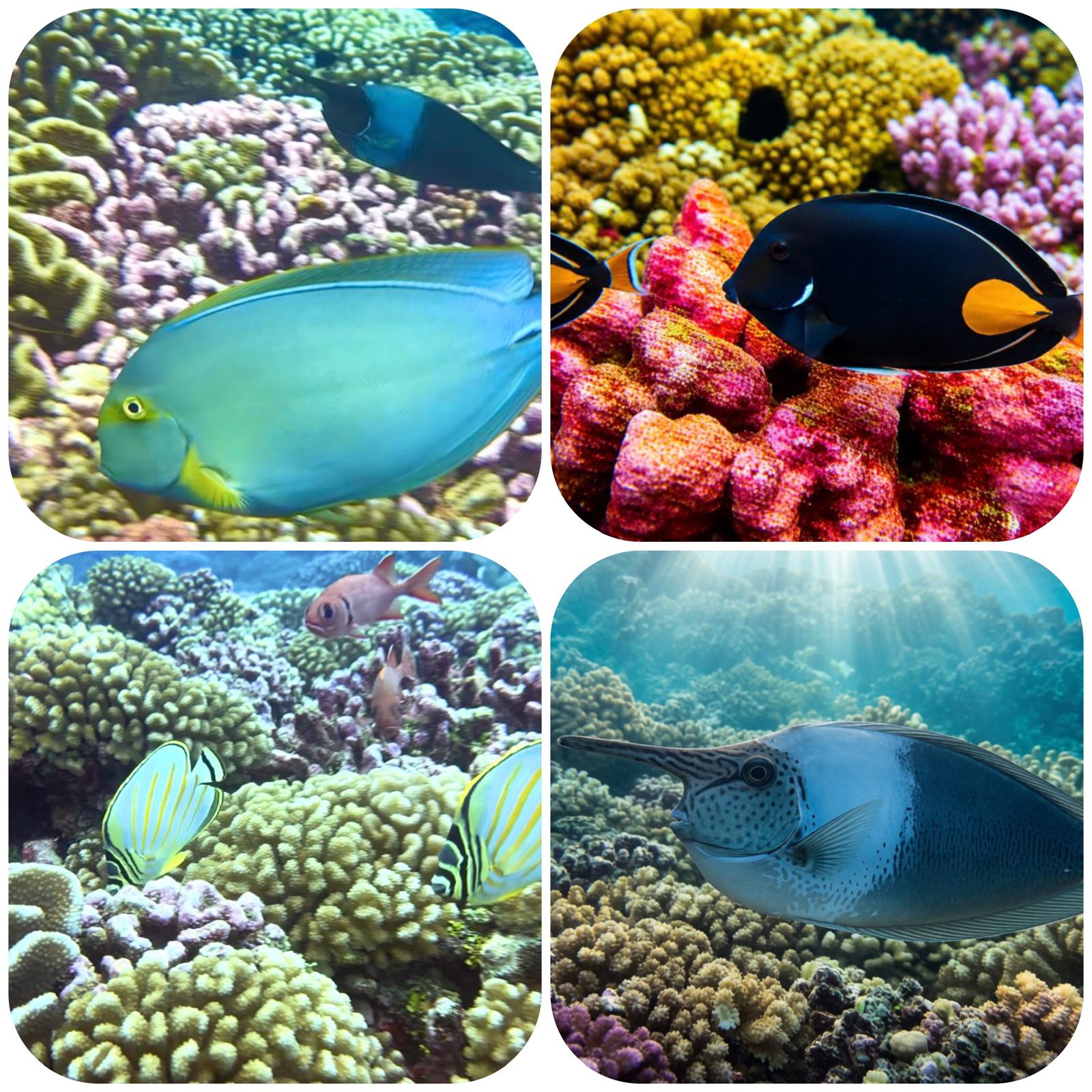
Nothing compares to sailing through the cut into a new atoll. The water is so unbelievably clear that it feels as though you’re floating over a giant glass-bottom boat. Every coral head, every ripple in the sand, every fish is visible far below the keel.
Inside the lagoon, coral bommies rise from the bottom like underwater gardens. These coral formations become incredible places to snorkel and dive.
Often we feel as though we’ve entered a giant aquarium. Fish of every imaginable color dart around us. Schools shimmer in the sunlight. We don’t know where to look first because there is simply so much life.
Each atoll has a single road that winds around its narrow strip of land. On one side lies the peaceful lagoon. On the other, the endless Pacific Ocean crashes against the reef. In some places, the atoll is so narrow that you can see both the inside and the outside at the same time.
Coconut palms dominate the landscape and provide another important source of income for the islanders, but beyond that, the scenery changes very little. And yet every atoll somehow has its own personality.
Fakarava gave us one of the most unforgettable experiences of our lives—the UNESCO World Heritage Wall of Sharks.
During the incoming tide, hundreds of sharks from several different species gather along what divers call the “shark highway.” You simply drift with the current as wave after wave of sharks glide past. They pay no attention to the divers. They seem focused on some mysterious destination, following an ancient route that no one has been able to fully explain.
It is one of the most epic, humbling, and almost ethereal dives we have ever experienced.
At our next stop, we’re hoping to visit one of the famous manta ray cleaning stations, where giant mantas patiently hover while small reef fish remove parasites from their bodies. Divers can quietly swim nearby as these graceful giants calmly go about their underwater spa treatment.
Every atoll offers something different. Some are so remote that you won’t see another person for days. Others have anchorages filled with cruising sailboats, yachts, and the occasional small expedition cruise ship. Each has its own personality. Its own rhythm. Its own beauty.
For years I dreamed about sailing into these legendary atolls. The photographs and stories captured my imagination long before we ever cast off the dock to begin our circumnavigation. Now that we’ve finally experienced them for ourselves, I can honestly say the Tuamotus have exceeded every expectation.
They aren’t just beautiful places to visit.
They’re places you feel fortunate to have experienced at all.
Fair winds,
Captain Dan and First Mate Alison
S/V Equus
If you haven’t read our books about our sailing adventures, visit my Nautical Novelist website and read the first two books of Riding the Waves of Reality! Book three is coming out soon.
www.alisongieschen.com