
Our Arrival at Minerva Reef
Three Nights of Rock and Roll
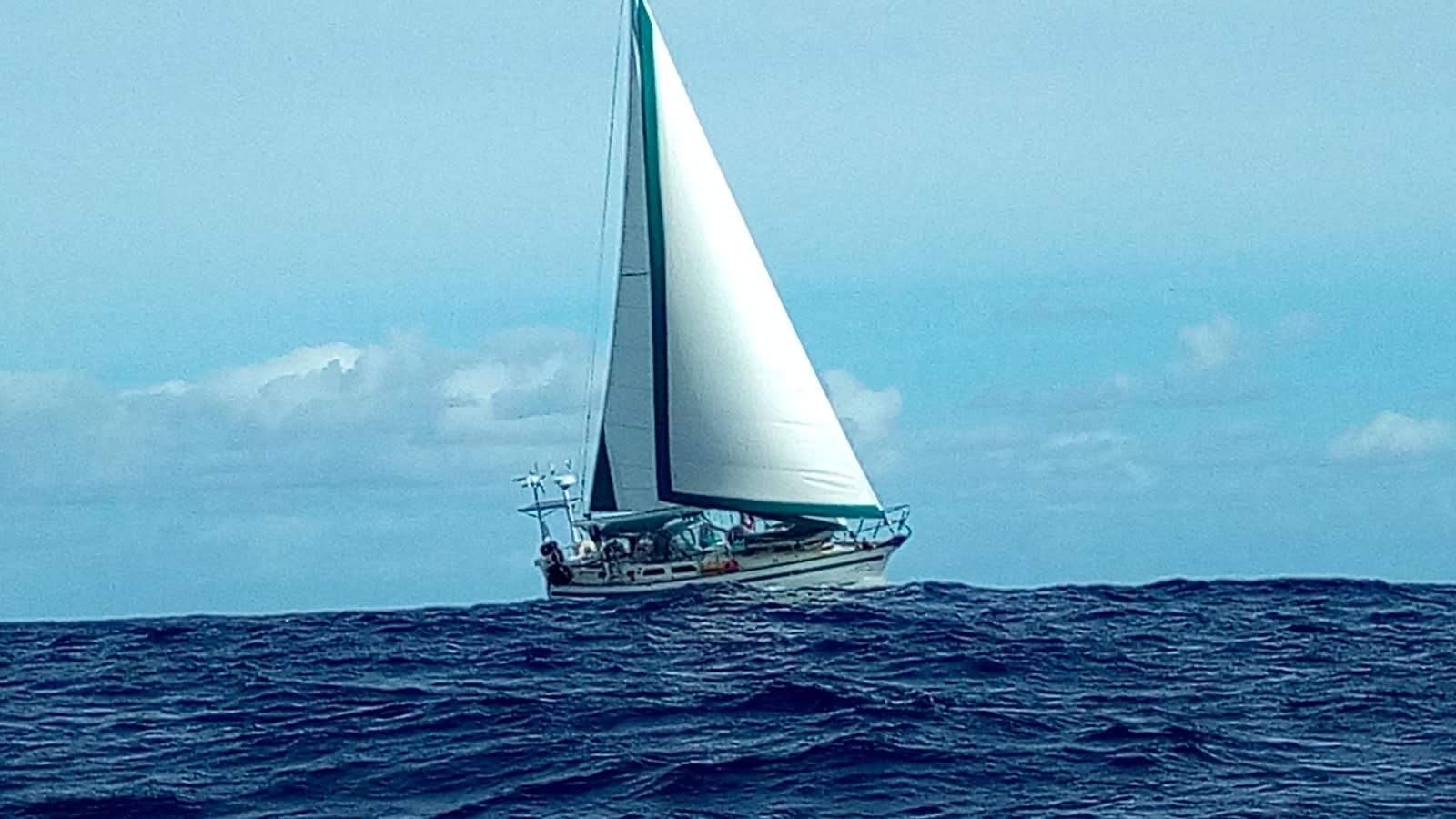
Our three-night passage to Minerva Reef was a rough one. We had steady winds in the 20-knot range and large, closely spaced waves. Instead of the comfortable, steady heel that makes life under sail manageable, Equus was being tossed back and forth in every direction. It was more like living inside a washing machine than sailing across the Pacific!
Everything that wasn’t secured found its way out of its home and went bouncing across the boat. Drawers opened, things flew off shelves, and anything that wasn’t tied down seemed determined to find a new place to live.
Cooking was impossible, although that wasn’t much of a concern since I had absolutely no appetite. For two straight days, I couldn’t even look at food. Thankfully, I had prepared some passage meals before we left, and Dan was able to heat those up and eat enough to keep his energy up.
I wasn’t nearly as successful. By the third day, I finally managed to eat a little of the banana bread I had baked before departure. It tasted wonderful!
Where Is the Land?
Early on the morning of day four, I would love to have shouted, “LAND HO!” But, alas, there was no land in sight.
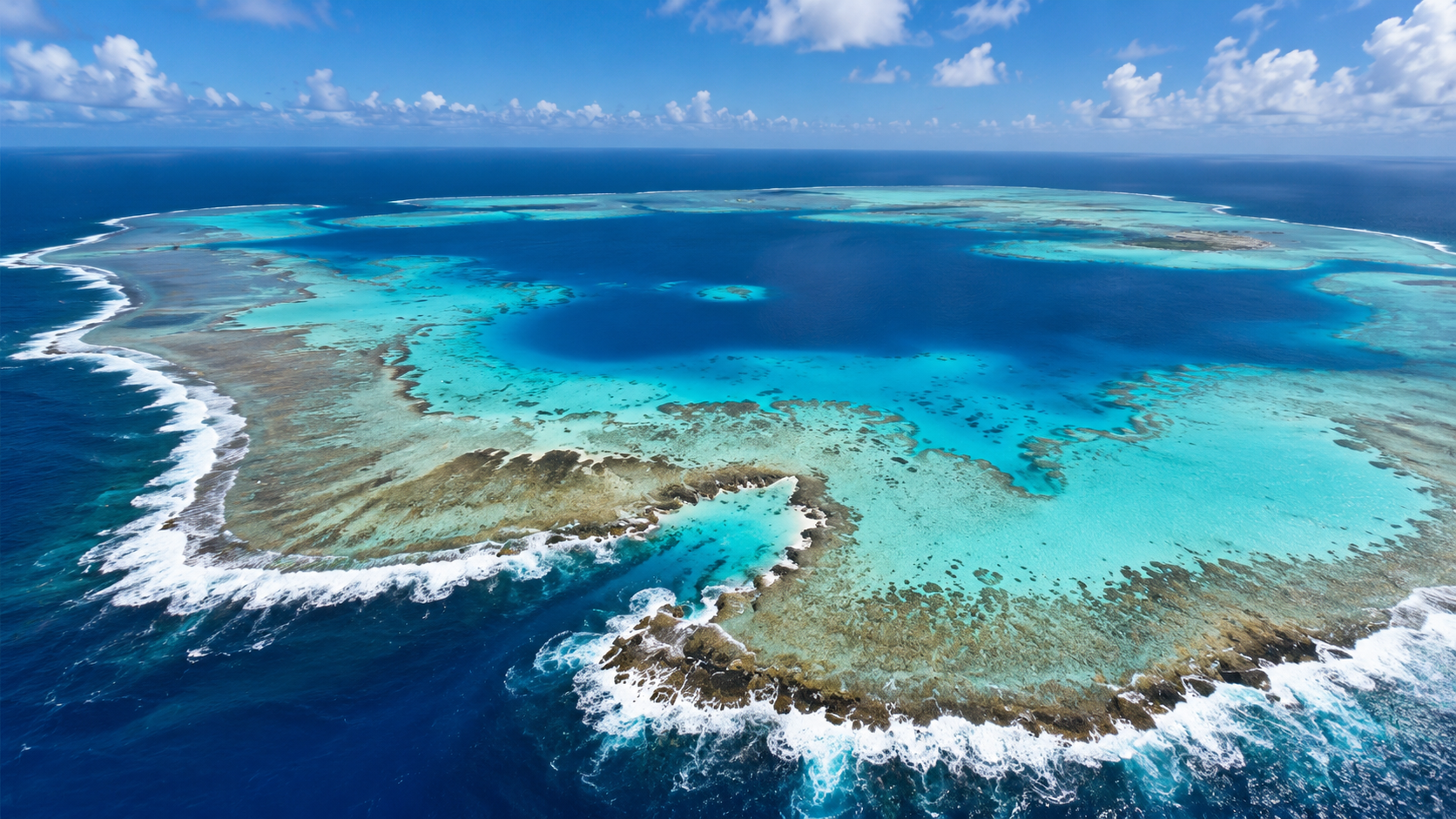
We had arrived at Minerva Reef, and at high tide, the entire reef was underwater.
That’s right. No island. No beach. No palm trees. Just ocean.
Minerva is a coral reef system made up of two atolls, North Minerva and South Minerva, sitting in the middle of the South Pacific. At low tide, portions of the reef may emerge, but at high tide, the ocean covers it completely. It is one of those places that makes you appreciate just how much of the world is hidden beneath the surface.
One Narrow Way In
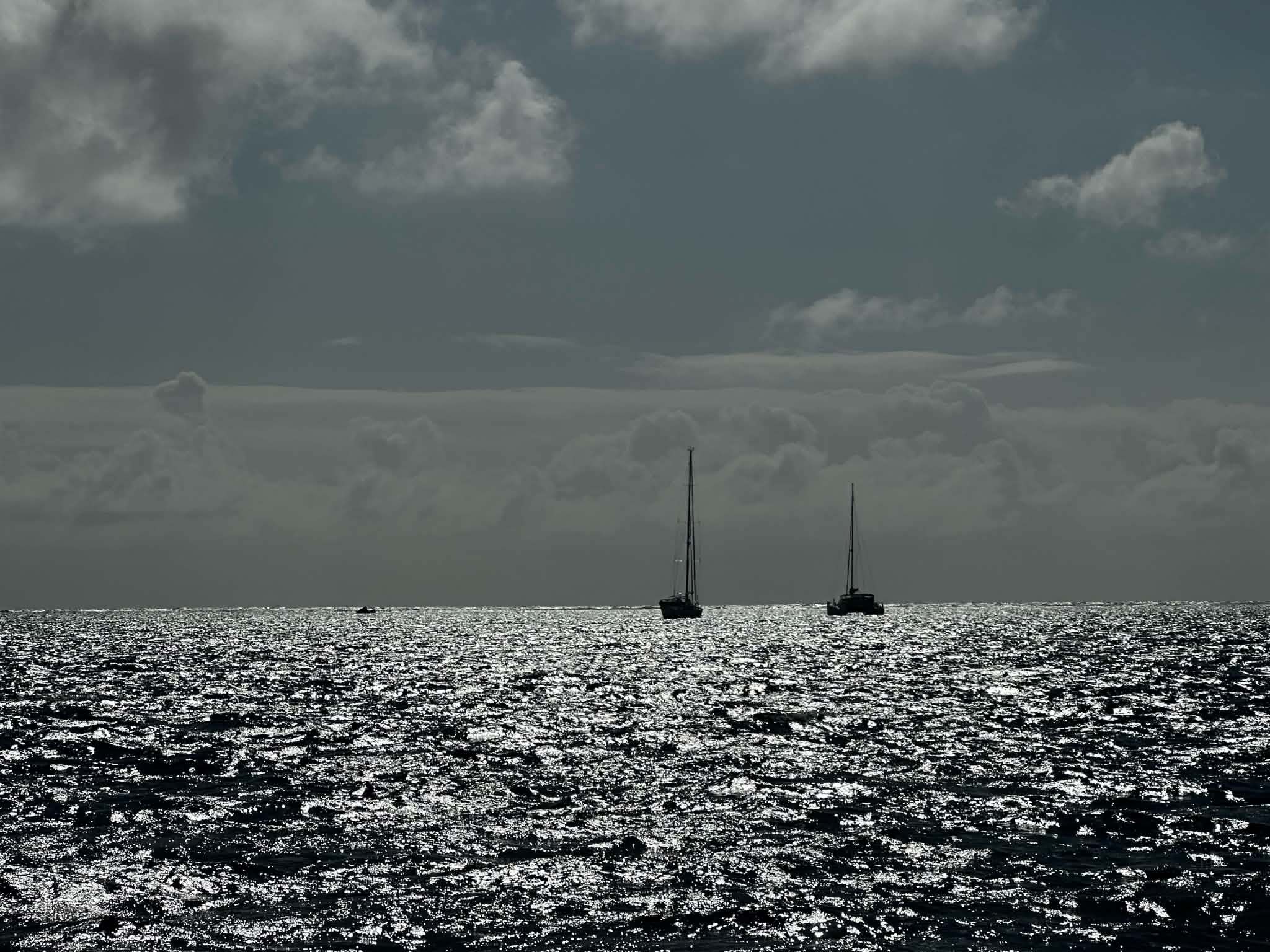
There is one pass into North Minerva, a narrow opening that provides the only way in or out of the lagoon. We could see the masts of several boats anchored inside, which was reassuring. But there were no navigation markers showing us the way through the entrance.
Dan had to rely entirely on our charts.
And sometimes charts are wrong.
We were about to find out just how much we trusted ours.
The morning was cloudy and dark. At seven o’clock, we couldn’t see any difference in the color of the water that might indicate where the deep ocean ended and the shallow reef began. Under better conditions, that change in color can be a helpful visual clue. Not today.
Keeping his fingers crossed, Dan lined Equus up with the course shown on the chart and steamed ahead. We were heading toward a narrow opening in a reef that we couldn’t actually see.
A Familiar Boat and a Rainbow
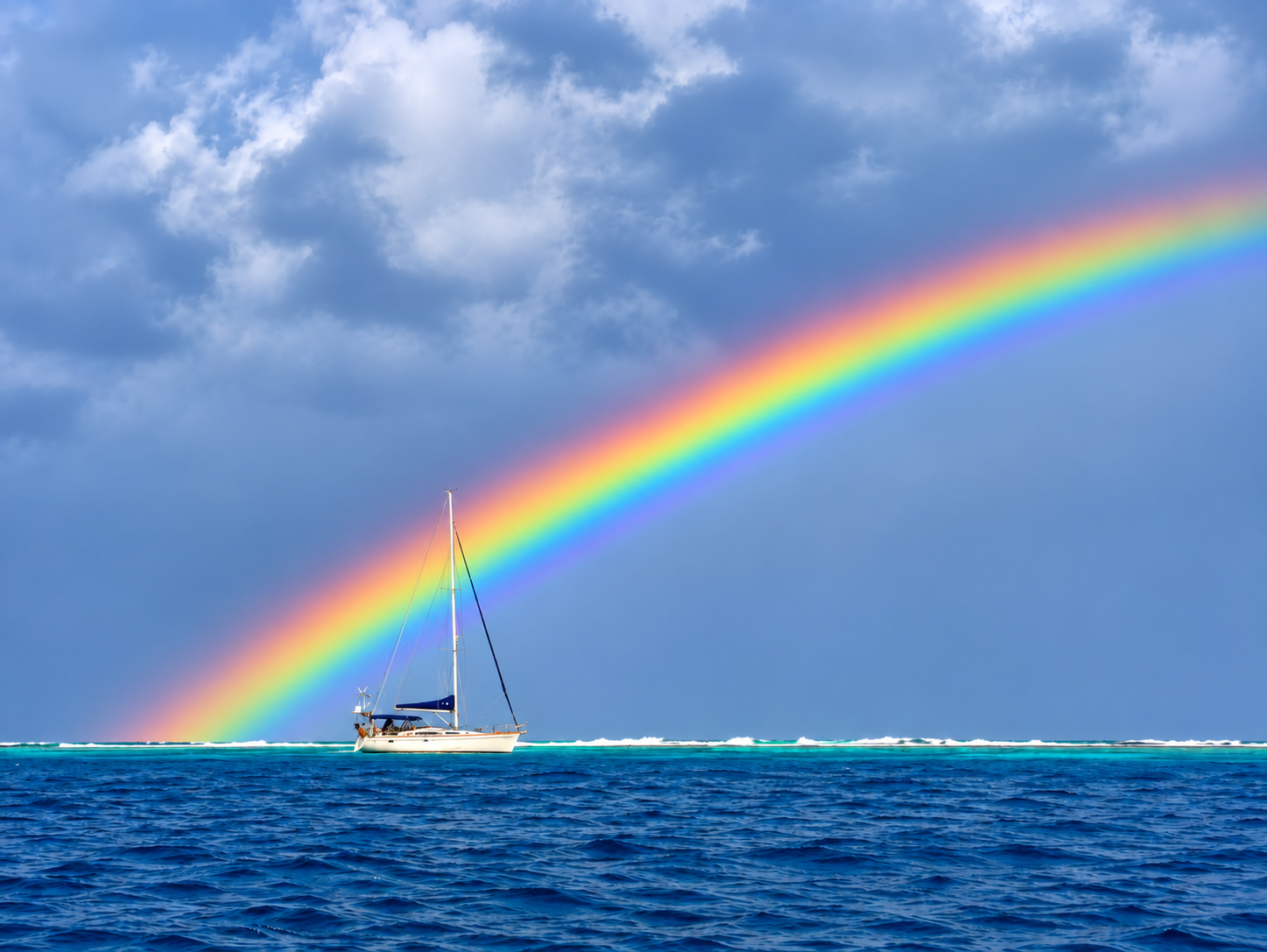
About half a mile from the entrance, Dan looked ahead and said, “Well, that’s fortunate.”
A catamaran named Filou de Mer was on its way out of Minerva. We had met the crew several times while island hopping through the South Pacific, so it was wonderful to see a familiar boat.
But there was one small complication. Only one boat could safely navigate the narrow pass at a time, and we were both approaching it at exactly the same moment.
Dan slowed Equus to a crawl while we watched Filou de Mer make her way toward the opening. She approached the pass and came through safely.
And then, just as she cleared the reef, a huge rainbow appeared in the sky above her.
Now, I’m not one to ignore a sign from above. After days of uncomfortable sailing, a dark and cloudy morning, and the prospect of navigating an invisible reef, that rainbow seemed like a pretty wonderful message. I took it as a sign that we were being watched over and that our turn would go just as smoothly.
As soon as Filou de Mer was safely through, Dan steered Equus onto the direct opposite course she had taken. We followed the line on the chart, eased into the pass, and finally made our way inside.
I think we both let out a rather enormous sigh of relief!
A Reef With a Dangerous History
Once safely inside, I started thinking about the history of this unusual place. It is difficult to imagine how frightening Minerva must have been to sailors hundreds of years ago.
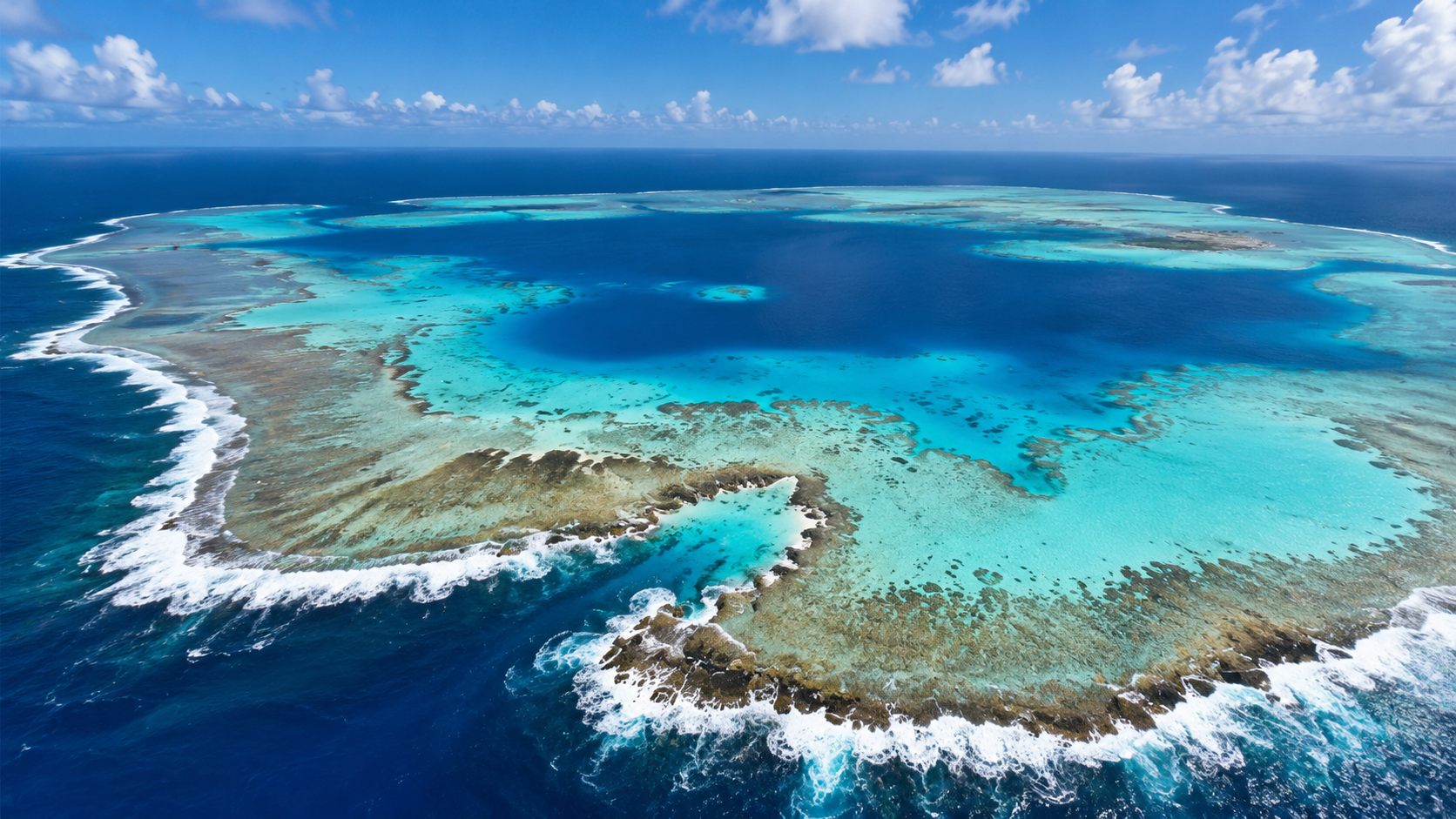
Picture yourself aboard a sailing ship, traveling across an enormous stretch of the Pacific. Around you is deep ocean, with thousands of feet of water beneath your keel. You have no GPS, no satellite imagery, no electronic charts, and no modern navigation equipment. Your position depends on celestial observations, compass bearings, dead reckoning, and whatever charts and information you have managed to obtain.
Then, without warning, your ship strikes something.
There is no island on the horizon. No towering cliffs. No warning beacon. Just an enormous coral reef lying almost entirely beneath the surface of the ocean.
That is the danger of Minerva.
The reefs were known to Pacific Islanders long before European explorers began recording them. In the early nineteenth century, however, they became known to European shipping through a series of unfortunate encounters.
In 1807, the brig Rosalia was wrecked on the reefs. Then, in 1829, an Australian whaling ship named Minerva struck South Minerva Reef. That wreck eventually gave the reefs the name we know today.
Other vessels followed. The Strathcona, sailing north after being completed in Auckland in 1914, was another casualty. In 1962, the Tongan vessel Tuaikaepau, traveling from Tonga toward New Zealand, struck South Minerva Reef.
The story of the Tuaikaepau is particularly remarkable. The survivors were stranded on the reef for months. Four people died, and the remaining crew faced an extraordinary struggle to survive. Eventually, Captain Tevita Fifita and two others constructed a small raft from recovered timber and sailed to Fiji to seek help. The remaining survivors were rescued after 102 days.
Think about that for a moment. More than three months stranded on a reef in the middle of the Pacific!
There have been other wrecks over the years, including the steamship Coomonderry, which struck North Minerva in 1969.
Remnants of old wrecks still lie on and around the reef. Pieces of hull structure, anchors, and chains are reminders of the vessels that came through this part of the ocean and never made it safely to the other side.
Those remains are more than just pieces of old ships. They are reminders that the Pacific Ocean has never been particularly forgiving to those who underestimate it.
What Else Lies Beneath Us?
Minerva wasn’t the only thing on our minds as we made our way across this stretch of ocean.
We had also been following reports of several recent encounters between cruising sailboats and whales. In these incidents, boats and whales apparently came together without either being aware of the other in time to avoid a collision. The consequences were devastating. One catamaran sank, another boat lost its rudder, and a third sustained such serious damage that an emergency rescue was required.
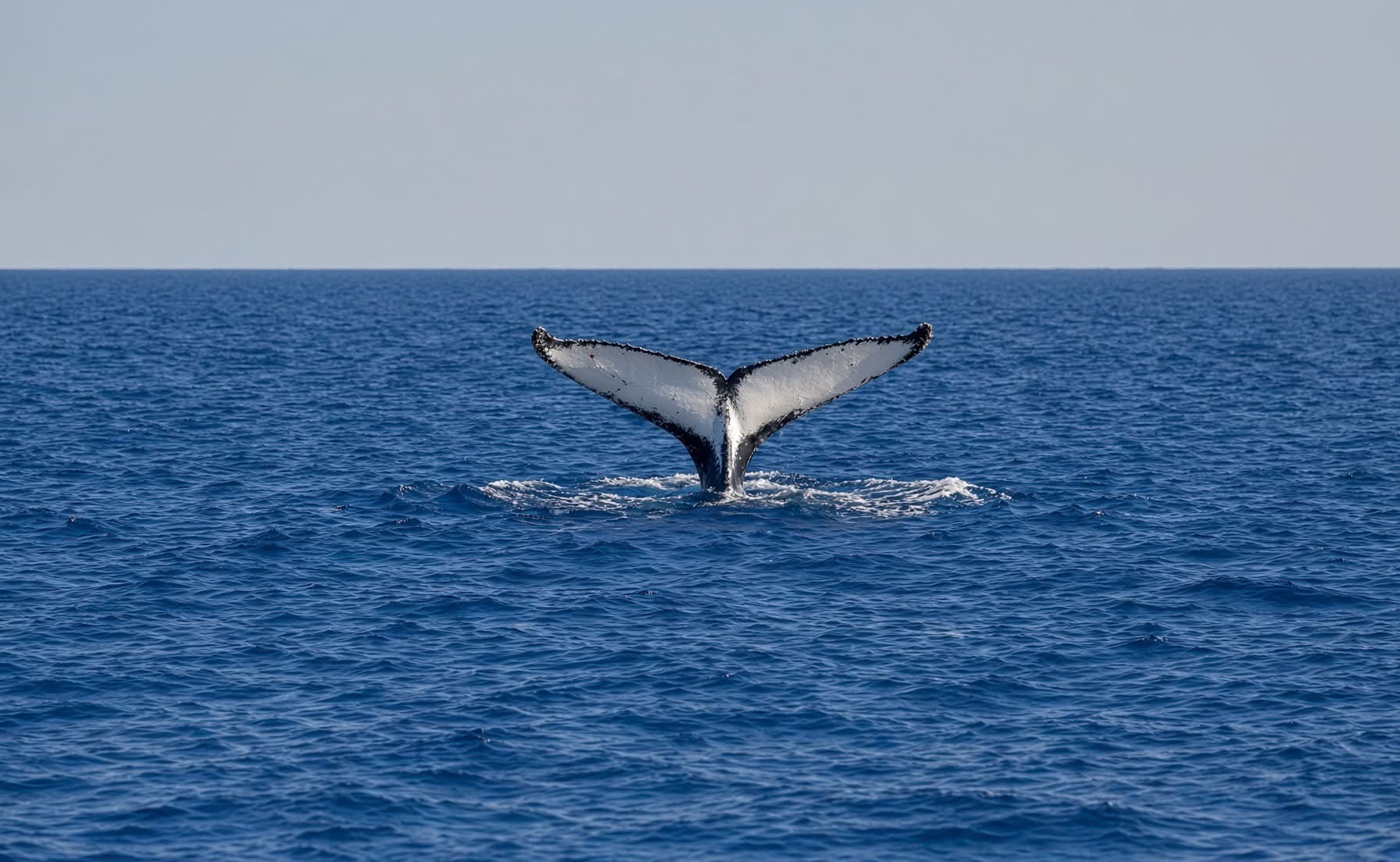
It is hard to imagine anything more unsettling than a collision with an animal that can weigh many tons. We love seeing whales, but when you’re aboard a relatively small sailboat, the thought of meeting one unexpectedly at sea is sobering.
And then there is the geology of this part of the Pacific.
Tonga lies along the highly active Tonga-Kermadec volcanic arc, one of the most geologically active regions on Earth. Much of this volcanic activity takes place beneath the ocean, where it is invisible to those of us sailing above it.
Submarine eruptions can send enormous quantities of lightweight volcanic rock, called pumice, floating across the ocean. These accumulations are known as pumice rafts. They can cover large areas of water, drift with currents, and create serious problems for vessels. Pumice can clog engine cooling systems, interfere with equipment, and make navigation difficult.
The 2019 eruption of an underwater volcano northwest of Vava’u produced extensive pumice rafts that drifted hundreds of miles across the Pacific. It was a reminder that even when the ocean looks perfectly calm, there can be extraordinary geological events taking place beneath it.
Undersea volcanic eruptions can also generate tsunamis under certain conditions. The Tonga-Kermadec region is part of a vast tectonic boundary extending toward New Zealand, where the Pacific and Australian plates interact. The 2022 eruption of Hunga Tonga-Hunga Ha’apai demonstrated just how powerful these volcanic systems can be.
So, as we crossed the ocean, we had several things to consider: powerful weather systems, large waves, the possibility of whale encounters, and the occasional reminder that the seabed beneath us is anything but quiet.
It is a lot to think about when your home is a 43-foot sailboat!
One More Passage to Go
Thankfully, our trip to Minerva was uncomfortable but uneventful. We made it safely through the pass, found our place inside the reef, and could finally relax a little.
Now we wait.
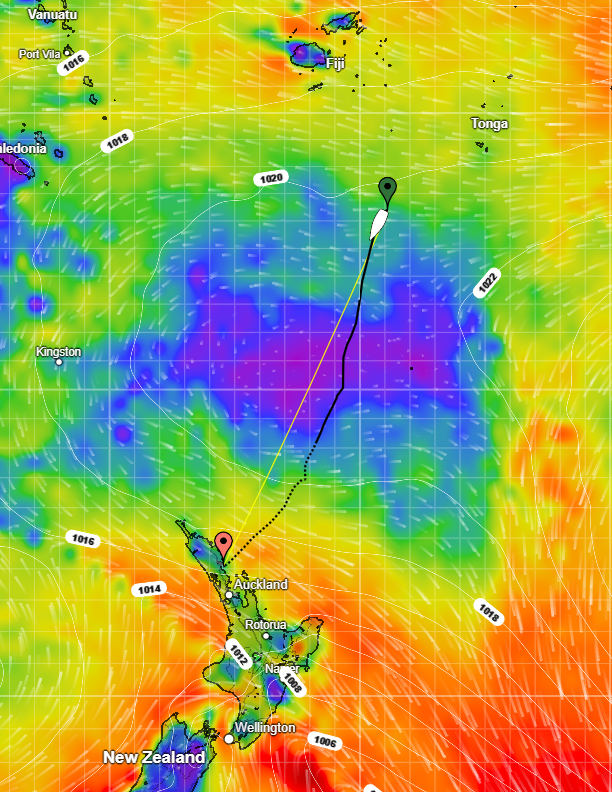
Our next challenge is getting from Minerva Reef to New Zealand. It is another substantial ocean passage, and finding the right weather window is essential. We have learned over nine years of sailing that patience is sometimes the most important piece of equipment aboard a boat.
There is no point rushing out just because we are ready to go. The ocean doesn’t care about our schedule!
For now, we are enjoying the fact that we made it here safely. We have a beautiful reef around us, other cruising boats for company, and a little time to catch our breath before the next adventure begins.
And that, my friends, is what sailing around the world is really like. There are spectacular places, wonderful people, unforgettable experiences, and moments when you wonder what on earth you have gotten yourself into!
Come Along for the Adventure!
Our latest book, Riding the Waves of Reality III: Into the Pacific, Paradise and Peril, has launched!
If you enjoy stories like this, stories about what it is really like to sail around the world, the beautiful places we discover, the people we meet, and the challenges that come with living at sea, I hope you will consider getting a copy.
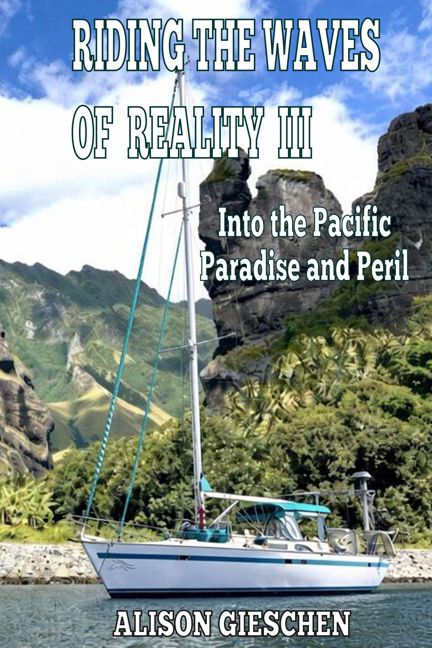
You don’t have to have read the first two books to enjoy this one. Each book follows a different part of our journey and stands on its own.
Our latest book, Riding the Waves of Reality III: Into the Pacific, Paradise and Peril, has launched!
If you enjoy stories like this, stories about what it is really like to sail around the world, the beautiful places we discover, the people we meet, and the challenges that come with living at sea, I hope you will consider getting a copy.
You don’t have to have read the first two books to enjoy this one. Each book follows a different part of our journey and stands on its own.
You can find your copy on Amazon or visit my author website at AlisonGieschen.com.
Or click on the picture!
And if you have already purchased the book and had a chance to read it, please consider leaving an honest review on Amazon. Reviews make a tremendous difference for independent authors. They help other readers discover a book and give it a better chance of being seen.
I need all the reviews I can get to help get this baby sailing!
Thank you for following our adventures, cheering us on, and keeping us in your thoughts and prayers. Your support means more than you know.
Until the next update, from somewhere in the middle of the South Pacific…
Fair winds and following seas!
Alison and Dan
S/V Equus